
Heel Spur Pain: What a Slipper Can and Cannot Do
Quick answer: A heel spur is a small bony growth on the heel bone, and many people have one without any pain. When a spur is linked to heel pain, treatment usually targets the soft tissue around it, not the spur itself, and footwear is part of that: cushioned heels, arch support, a firm base and a slipper that does not slide. Slippers can help comfort but cannot remove a spur. See a doctor if pain persists, and note that a spur on an X-ray does not prove it is the source of your pain.
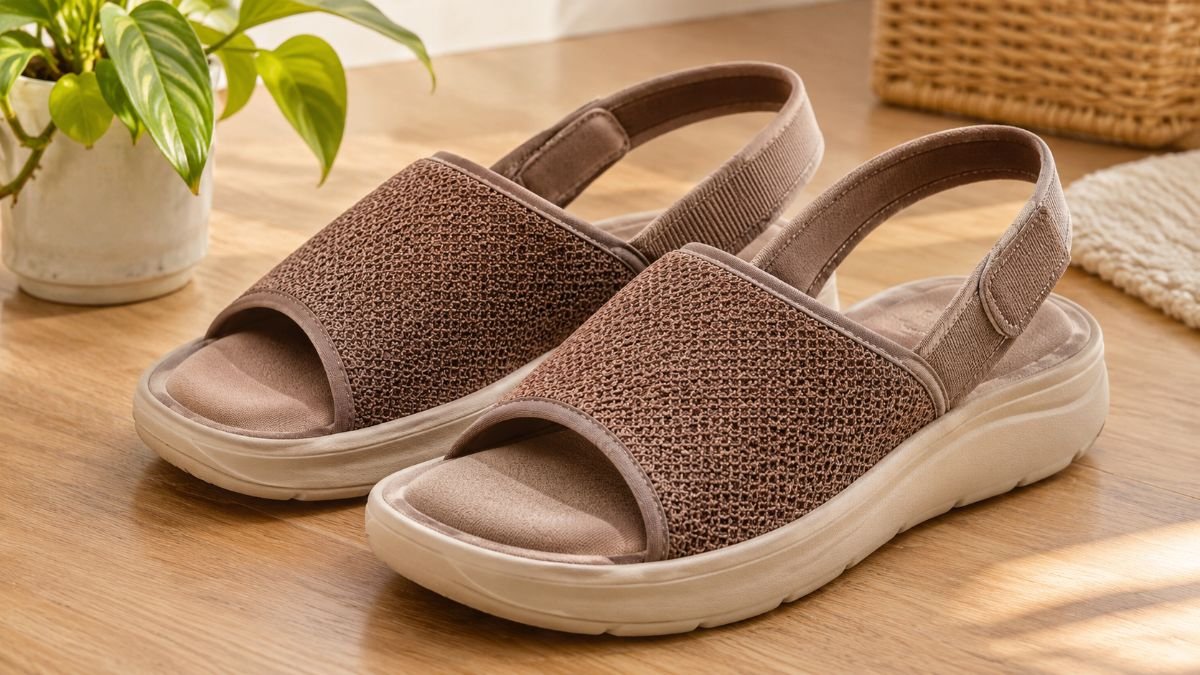
What a Heel Spur Is, and What It Is Not
A heel spur, or calcaneal spur, is a calcium deposit that forms a bony projection on the heel bone, usually where the plantar fascia attaches under the heel. It is often found on X-rays by chance. The NHS-affiliated Livewell Southwest leaflet on plantar heel pain notes that spurs are incidental findings in about 30 percent of people, which means many people with a spur have no heel pain at all.
That matters for how you shop. A hospital guide from Academic Hospital makes the point that heel pain should not be put down to a spur just because one shows on an X-ray, and that treatment aims to reduce stress on the plantar fascia, not to dissolve the spur. Other causes of heel pain include Achilles tendinopathy, a stress fracture, fat pad problems, nerve entrapment and arthritis.
Why Some Spurs Hurt
When a spur is linked to pain, it is usually because the surrounding soft tissue is irritated. London Bridge Orthopaedics lists repetitive stress from walking, running or standing, flat feet or high arches, tight calf muscles, poor footwear with limited cushioning and extra body weight as contributing factors. The NHS page on plantar fasciitis gives a similar list, and the two conditions often overlap, so many heel spur pages and plantar fasciitis pages give the same footwear advice.
Heel Spur, Plantar Fasciitis or Something Else?
| Cause | Typical pattern | Footwear angle |
|---|---|---|
| Plantar fasciitis | Pain under the heel and arch, worst with first steps, eases then returns after long standing | Cushioned heel, arch support, avoid flip-flops and backless slippers (NHS) |
| Heel spur | Bony growth that may be painless; pain is usually from surrounding soft tissue | Same cushioning and support approach, plus offloading the heel |
| Achilles tendinopathy | Pain at the back of the heel or above it, often with calf tightness | A slight heel lift can help some people, but a health professional should assess |
| Heel fat pad problems | Bruise-like pain in the centre of the heel | Thick cushioning under the heel |
| Stress fracture or injury | Sharp pain after a fall or sudden activity | Needs medical assessment, not a slipper |
| Nerve irritation | Burning, tingling or numbness | Needs assessment, especially with diabetes |
Summary of causes listed by NHS and hospital pages. Only a professional can tell which applies to you.
The table is why this article does not promise anything for the spur itself. Footwear is a sensible, low-risk step for comfort, but a proper diagnosis comes first if the pain is persistent. Our general heel pain guide covers the checks any heel pain slipper should pass.
Slippers and Heel Pads Shoppers Often Compare
These are examples of slippers and a heel pad listed online. None is claimed to remove or treat a heel spur. If pain lasts, see a doctor.

Silicone Gel Heel Cups for Heel Pain (Men and Women)
A heel cushion pad that goes inside a shoe or slipper with a closed heel. Listed for heel and ankle discomfort, not a treatment.
Check on Amazon.in
YOHO ArchFlex Orthopedic Slippers for Men
Listed with arch support, anti-skid soles and light weight.
Compare on Amazon.in
Doctor Extra Soft Ultra Cushion Slippers for Men
Listed as lightweight men’s slippers for orthopedic and diabetic use.
View on Amazon.in
Ortho Joy Orthopedic Soft Slippers for Ladies
Listed as an MCR chappal for women for daily use.
See it on Amazon.in
Frido Cloud Comfort Slippers for Women and Men
Listed with two options: with arch support and without. Pick deliberately.
Check the options
Ortho + Rest Men Slipper
Listed as a super soft, lightweight men’s flip-flop for home and daily use.
See it on Amazon.inTry them on in Chennai
If you are in Chennai, you can try MCR and MCP chappals in person at our Choolaimedu store (No. 223, Choolaimedu High Road, near Gangai Amman Kovil, Chennai 600094). We are a footwear shop, not a clinic. WhatsApp us to check what is in stock before you travel.
What Footwear Advice Is Common to Both
Orthopaedic and podiatry sources agree on the broad shape of footwear for spur-related pain: good quality, well-fitting shoes with shock-absorbing soles, a firm shank and a supportive heel counter, replacing worn footwear, and using orthotics for extra cushioning and arch support where advised. For slippers, which rarely have a shank or heel counter, that translates into a thick cushioned heel, some arch contour, a firm enough base and a strap that holds the heel.
| Shoe feature | What it does | What to look for in a slipper |
|---|---|---|
| Shock-absorbing sole | Softens heel strike | Thick, springy heel foam that recovers after a thumb press |
| Firm shank | Stops the middle of the shoe folding | A base that bends at the toes but not in the middle |
| Heel counter | Holds the heel in place | A back strap or closed heel |
| Arch support | Spreads load along the foot | A gentle contoured footbed |
| Worn-out check | Replace when the heel is flattened | Press the heel and compare with a new pair |
General footwear features, not a prescription.
Slippers for Heel Spur: What Helps and What Does Not
For indoor use, aim for a soft but supportive pair with a thick heel and a strap. Avoid flip-flops and backless slides. The NHS advises avoiding them for plantar fasciitis, and they leave the heel unsupported and the toes gripping. Thin flat chappals give no cushioning on hard floors, which is common in Chennai homes.
Heel cups and pads can add cushioning inside a closed shoe or slipper with a heel, but they cannot be fitted to a thong. Also be wary of “heel spur” marketing that promises to dissolve or remove the spur. The research literature and the hospital guides above are clear that footwear does not remove a spur. Footwear can only change how much load the heel takes.
What Else Is Used for Spur-Related Heel Pain
Beyond footwear, hospital and clinic pages list relative rest, ice, stretching of the calf and plantar fascia, orthotic inserts, activity changes and, for stubborn cases, treatments such as shockwave therapy, night splints and injections. Surgery is uncommon. The NHS heel pain page recommends seeing a GP if pain has not improved after two weeks of self-care. Our guide on slippers for plantar fasciitis goes through the NHS self-care steps in more detail.
Flat Feet, High Arches, Weight and Standing
London Bridge Orthopaedics lists flat feet or high arches, tight calves, repetitive stress and extra body weight as factors that load the heel. Each points to a slightly different footwear need. People with flat feet often feel better with a gentle arch contour, while people with high arches usually need cushioning that spreads load across the foot. Heavier wearers need a denser foam that does not flatten quickly, and people who stand all day need a closed shoe during work. If you are not sure which applies, a podiatrist can look at your foot posture and gait. Read our guide on MCR and EVA soles for how density affects durability.
A Practical Day Plan
- On waking: put supportive slippers on before the first step.
- At work: if you stand for hours, a closed cushioned shoe usually supports the heel better than a slide.
- At home: a soft supportive slipper with a heel strap on hard floors.
- In the bathroom: a separate grippy pair kept for wet floors.
- Weekly: look at the wear on your usual pair and replace flat ones.
Can You Add an Insole or Heel Pad to a Slipper?
Sometimes. Closed-back slippers and sandals with a straight, removable or flat footbed can take a thin heel pad. Thong slippers with a moulded footbed usually cannot, because the pad slides and changes the fit. Never stack a thick insole into a slipper with a shallow footbed, since it pushes the foot up and out. The NHS mentions insoles and heel pads as part of plantar fasciitis self-care and suggests asking a pharmacist, and a podiatrist can fit a more specific insert. If you have diabetes or reduced feeling, take advice before adding anything to your footwear.
If You Have Diabetes or Numbness
Foot pain with diabetes, tingling or loss of feeling needs a doctor first, because footwear choices change with risk. Read our guide on diabetic slippers and the BIS standard for therapeutic footwear for the difference between a soft slipper and prescribed footwear.
Questions to Ask a Doctor or Podiatrist
- Is my pain from the plantar fascia, the heel pad, the Achilles or something else?
- Do I need an X-ray or scan, and what would it change?
- What type of insole, if any, is right for my foot shape?
- How many hours a day should I wear supportive footwear?
- What stretches are safe for me and how long should I do them?
- When should I come back if it is not improving?
Bring your usual slippers to the appointment. The wear pattern on the soles is useful information.
Choosing in Chennai
Come to our Choolaimedu shop with your current pair and ask to compare it against a new one. Press the heels, fold the soles and walk on the floor. A pair that feels fine in your hand may feel different under your weight. MCR, MCP and EVA soles behave differently, as our MCR vs MCP guide explains.
What to Expect Over Time
Hospital guides generally describe most spur-related heel pain as improving with non-surgical care, but timelines vary a lot between people. London Bridge Orthopaedics says conservative treatment is effective in most cases, with footwear, stretching and activity changes as the key parts. Some people improve in weeks and others take months. Surgery is rarely needed. Because the spur itself usually remains on an X-ray even when pain settles, do not judge progress by the spur. Judge it by how your first steps in the morning feel and how long you can stand comfortably. If you are not improving, go back to your doctor instead of buying another pair of slippers.
Keep expectations realistic: a slipper is a comfort tool. It gives the heel a kinder surface for the hours you spend at home, which is often a large part of the day. Combined with the stretching and load advice a professional gives you, it is a useful part of the plan.
Myths About Heel Spurs and Footwear
- “A spur on X-ray is the cause of my pain.” Not necessarily. Spurs are common and often painless.
- “The right slipper will dissolve the spur.” Footwear cannot dissolve a spur.
- “Harder is better.” A rigid flat sole gives no cushioning. A firm base with a cushioned heel is the aim.
- “I can skip the doctor.” If pain lasts beyond two weeks, get it assessed.
When to Replace
Replace slippers when the heel is flattened, the sole is worn unevenly or the strap has stretched. Rotating two pairs gives foam time to recover. A simple test is to stand a new pair and your old pair side by side on a flat table and compare the heel thickness. If the old heel is visibly thinner or tilted to one side, it has stopped doing its job and is a likely contributor to sore mornings.
When to See a Doctor
- Pain is severe, worsening or limiting normal activity.
- No improvement after two weeks.
- Tingling, numbness or burning.
- Pain after an injury.
- You have diabetes.
A podiatrist or orthopaedic doctor can examine the foot and, if needed, arrange imaging. The slipper should support their advice.
Frequently Asked Questions
What is the best slipper for a heel spur?
There is no single best. Look for a cushioned heel, arch contour, firm base and a heel strap, and avoid flip-flops and backless slippers.
Can slippers remove a heel spur?
No. A spur is bone. Footwear can only reduce the load on the heel and the soft tissue around it.
Do all heel spurs cause pain?
No. Many are found by chance on X-rays in people with no heel pain, and heel pain has other causes.
Are MCR chappals good for heel spurs?
A thick, springy MCR chappal with a heel strap can be comfortable, but the material alone is not a treatment.
Should I use heel cups?
They can add cushioning in a closed shoe or slipper with a heel. They do not fit thong slippers. A pharmacist or podiatrist can advise.
When should I see a doctor about heel pain?
If pain is severe, worsening, has not improved after two weeks, or you have numbness or diabetes.
Is heel spur the same as plantar fasciitis?
No, though they often overlap. A spur is a bony growth and plantar fasciitis is strain on the fascia.
Is walking barefoot bad for heel spurs?
The NHS advises people with plantar fasciitis to avoid walking barefoot on hard surfaces, and the same caution is common for spur-related pain.
The Short Version
A heel spur is bone and slippers cannot remove it, but the right slipper can reduce load on a sore heel: a cushioned heel, arch contour, firm base and a strap. Avoid flip-flops, replace worn pairs, and see a doctor if pain lasts beyond two weeks or you have numbness or diabetes.
Keep Reading
Related guides
Chennai
Sources
- NHS: Plantar fasciitis
- NHS: Heel pain
- Livewell Southwest NHS podiatry: Plantar heel pain syndrome patient leaflet, 2025
- Academic Hospital: What is a heel spur? Symptoms, causes and treatment
- London Bridge Orthopaedics: Heel spurs
- Sydney Physio Clinic: Heel spurs, causes, symptoms and treatments
- APTA / AOPT: Heel pain, plantar fasciitis clinical practice guideline, 2023 revision (Koc et al., JOSPT 2023;53(12):CPG1-CPG39)
Some links on this page are affiliate links, so we may earn a small commission on qualifying purchases at no extra cost to you. See our affiliate disclosure. Foot-health content here is general information, not medical advice.


