
The short answer: the best walking shoe for you is the one that fits your longer foot with about a finger’s width (roughly half an inch) of room at the toes, holds your heel without slipping, bends at the ball of the foot, and feels comfortable in the first walk. In India’s heat and monsoon, add a breathable upper and an outsole that grips wet surfaces. This guide explains each check, then lists eight Amazon.in listings worth opening, split between walking-labelled shoes and running shoes that doctors say can double for walking.
The Picks at a Glance
These are listings, not lab results. We chose shoes whose Amazon.in listing names walking as the use, plus three running shoes, because Harvard Health says running shoes can be used for walking (the reverse is not advised). Availability and sizes change daily, so confirm your size on the live page.
| Shoe | Listed as | Check this first |
|---|---|---|
| Skechers Go Walk Flex (Men) | Walking shoe | UK size and width in the listing |
| Skechers Go Walk Flex Slip-ins (Men) | Sneaker, slip-on | Heel hold, since there are no laces to tighten |
| Skechers GO Walk 6 Bold Knight (Men) | Slip-on walking shoe | Whether your size is still in stock |
| Skechers Go Walk 7 Ennoble (Men) | Sneaker | Upper material and closure |
| Skechers Go Walk Flex (Women) | Walking shoe | Women’s size list, not men’s |
| Nike Revolution 8 Easyon (Men) | Easy-on shoe | How it fastens and fits at the heel |
| ASICS Gel-Contend 4B+ (Men) | Running shoe | Weight and cushioning details |
| PUMA Softride Carson Sliptech II (Unisex) | Running shoe, slip-on | Unisex size chart against your foot |
Eight Listings Worth Checking
Each box below links to the live Amazon.in listing. We do not quote prices, ratings or review counts because they change constantly, and we have not worn or lab-tested these shoes. Use the notes as a shortlist, then apply the fit checks further down.

Skechers Go Walk Flex (Men)
Listed on Amazon.in as walking shoes in the Go Walk Flex range. Check the listing for the UK sizes and colours currently offered.
Check it on Amazon
Skechers Go Walk Flex Slip-ins (Men)
A slip-on style from the same Go Walk Flex range. Handy if you take shoes off often, at home or at a temple; the trade-off is less lace adjustment.
See this listing on Amazon.in
Skechers GO Walk 6 Bold Knight (Men)
An earlier Go Walk model listed as slip-on walking shoes. Older models can have patchy size stock, so confirm your UK size before you commit.
View it on Amazon.in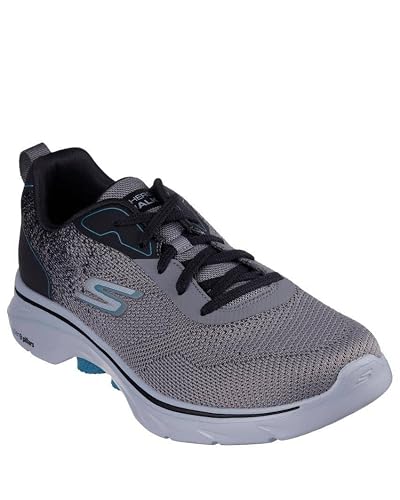
Skechers Go Walk 7 Ennoble (Men)
A newer Go Walk model, listed as a sneaker. Read the listing for closure type and upper material.
Open the Amazon listing
Skechers Go Walk Flex (Women)
The women’s listing in the Go Walk Flex range, sold as walking shoes. Women’s UK sizing differs from men’s, so choose from the women’s size list.
Look it up on Amazon.in
Nike Revolution 8 Easyon (Men)
Nike’s Revolution line is a running shoe, and Harvard Health notes that running shoes can double as walking shoes. The name points to an easy-entry design, so check how it fastens.
Check sizes on Amazon.in
ASICS Gel-Contend 4B+ (Men)
Listed as a running shoe. It can serve as a walking shoe, but read the listing for cushioning, weight and upper details first.
Check it on Amazon
PUMA Softride Carson Sliptech II (Unisex)
A unisex slip-on style listed as a running shoe. Unisex sizing varies, so compare the size chart with your measured foot.
See this listing on Amazon.inIf you live in Chennai and would rather try footwear on first, you can visit our Choolaimedu store and message us on WhatsApp to ask what is in stock before you travel.
Choosing for Indian Roads and Weather
Most walking advice is written for cooler, drier countries. These points are practical reasoning for Indian conditions rather than findings from a study, so treat them as sensible defaults.
- Breathable uppers. In a hot, humid city, a mesh or knit upper lets heat and sweat escape. Fit & Well quotes a podiatrist warning that trapped moisture can raise the risk of fungal infections such as athlete’s foot, which is a good reason to avoid sealed, non-breathing shoes for long walks.
- Socks matter as much as shoes. Harvard Health suggests synthetic or cotton-synthetic blends because they wick moisture away from skin. Choose your socks first, then try shoes on with them.
- Grip on wet surfaces. Smooth, worn soles on wet tiles, marble or monsoon-slick roads are a slip risk. Look at the outsole pattern in the listing photos and avoid flat, glossy soles for rainy-season walking.
- Dry them properly. Cleveland Clinic’s physical therapist notes that shoes wear out faster if they get wet while walking. Let shoes dry away from direct harsh sun and rotate pairs when you can.
- Slip-ons and temples. If you remove shoes often, a slip-on style is convenient, but check that the heel stays put when you walk fast.
How to Check Fit Before You Buy
- Shop late in the day. Harvard Health notes your feet are at their largest by evening, so measure and try shoes then.
- Fit the larger foot. Texas A&M’s health service says about 60% of adults have one foot longer or wider than the other, and advises choosing the shoe that fits the larger one.
- Leave toe room. Cleveland Clinic and Harvard both describe roughly one finger’s width, about half an inch, between your longest toe and the front. Some podiatrists describe it as a thumb’s width.
- Test the bend. Hold the heel and toe and press them together. Harvard says the shoe should bend easily at the ball of the foot. If it folds in the middle at the arch, look elsewhere.
- Check the heel. It should feel snug with no slipping. A loose heel is a common source of blisters.
- Walk before you decide. Wear the shoe indoors for a few minutes. A shoe that pinches at the store will not improve.
Shoe sizes in India follow UK numbering, and brands cut their lasts differently. If you are unsure of your size across brands, our shoe size guide explains the UK, US and EU conversions. When ordering online, check the seller’s exchange terms before you buy, because the right fit is hard to confirm from a photo.
Walking Shoes or Running Shoes?
Harvard Health’s guidance, citing a sports medicine physician, is that running shoes can generally be worn for walking, but you should not run in walking shoes. Running shoes tend to have thicker, shock-absorbing midsoles and are lighter. A podiatrist quoted by the Washington Post (carried by the Daily Herald) says a true walking shoe often has a more flexible forefoot and a firmer midsole.
In practice, that means a cushioned neutral running shoe is a reasonable walking choice if it fits well, and a purpose-built walking shoe is a reasonable choice if your walking is steady and you never run. If you do both, buy a running shoe. Our upcoming running-shoe guide will cover that side in more depth.
Our Evaluation Framework
Because we do not test shoes ourselves, every listing is judged on information you can verify. Here is the checklist we apply, and you can reuse it on any shoe.
| Check | What good looks like | Where to verify |
|---|---|---|
| Fit and toe room | About a finger’s width ahead of the longest toe | Your own foot, in person or via a return-friendly order |
| Forefoot flex | Bends at the ball of the foot | The bend test above |
| Heel hold | Snug, no slipping | A short walk indoors |
| Cushioning and stability | Cushioned yet stable, not mushy | Cleveland Clinic and Harvard guidance |
| Breathability | Mesh or knit upper for hot weather | Listing materials and photos |
| Outsole grip | Visible tread for wet surfaces | Listing photos of the sole |
| Weight | Light enough that long walks do not tire you | Listing specifications |
| Lifespan | Replace on a schedule or at visible wear | See the next section |
Where the Experts Disagree
How long walking shoes last. Harvard Health says experts suggest replacing walking shoes every 300 to 500 miles (about 480 to 800 km). Cleveland Clinic’s physical therapist says a good pair typically lasts around 400 miles and suggests replacing them about every six months if you do not track distance. Texas A&M’s health service gives a wider window of 600 to 800 miles or six to eight months. WebMD quotes a sports medicine expert saying walking shoes absorb less force than running shoes and can last up to nine months. The sensible reading is a range: replace sooner if you walk daily, on rough roads or in wet conditions, and replace at once when soles are worn flat or your feet start aching.
How stiff a walking shoe should be. Traditional advice favours a firmer midsole, which the podiatrist in the Washington Post piece describes. WebMD, however, quotes experts saying people with knee pain should think beyond a stereotypical stiff leather walking shoe. If you have pain, comfort and a clinician’s advice outrank any rule of thumb.
Finger or thumb. Sources describe toe room as a finger’s width, a thumb’s width or half an inch. These are close enough that the practical message is the same: you should be able to wiggle your toes and there should be a visible gap at the front.
Who Should Skip These Picks
- People with bunions, hammertoes or arthritis in the toes. A podiatrist quoted by The Healthy says an extra-wide toe box matters for these conditions, and a narrow fit may not work for wide toes. Check the width options and talk to a podiatrist.
- Anyone with persistent foot, knee or back pain. Cleveland Clinic’s podiatrist links footwear to such pain, but a shoe is not a diagnosis. See a doctor if pain continues.
- People with diabetes or reduced foot sensation. Get footwear advice from your doctor or podiatrist rather than choosing from a list.
- Runners. If you run even occasionally, buy a proper running shoe rather than a walking-labelled model.
- Anyone who needs laces for a secure fit. Skip the slip-on styles above and pick a lace-up shoe.
This guide is general information, not medical advice. For foot problems, see our foot health page and consult a qualified clinician.
Mistakes to Avoid
- Buying by looks or discount instead of fit.
- Trusting your usual size across brands without checking each size chart.
- Trying shoes on in the morning, when feet are smallest.
- Wearing the same pair every single day. Cleveland Clinic notes shoes can take up to 24 hours to regain their normal shock absorption, so rotating two pairs helps.
- Keeping worn-out shoes because they still look fine from the outside.
- Ignoring the monsoon: smooth soles and non-draining uppers make wet days harder.
Questions Answered
What is the best walking shoe in India?
There is no single best. The best walking shoe is the one that fits your larger foot, with about a finger’s width of toe room, a secure heel and a forefoot that bends at the ball. Use the shortlist above and confirm fit yourself.
Can I walk in running shoes?
Yes. Harvard Health says running shoes can be used for walking. It advises against running in walking shoes because they are not built for the higher impact.
How often should I replace walking shoes?
Sources range from every 300 to 500 miles or roughly six months (Harvard, Cleveland Clinic) up to six to eight months or nine months in other guidance. Replace earlier when the sole is worn flat or the shoe stops feeling supportive.
What size should I buy?
Measure your larger foot late in the day, leave about a finger’s width at the toes, and read each brand’s size chart. Our size guide covers UK, US and EU conversions.
Are slip-on walking shoes a good idea?
They are convenient, but without laces you rely on the shoe’s shape for heel hold. Test that the heel does not slip. If it does, choose a lace-up shoe.
Which walking shoe suits Chennai’s weather?
Prefer a breathable upper, moisture-wicking socks and an outsole with visible tread. Let shoes dry fully after rain or sweaty walks.
The Short Version
Fit comes first: measure late in the day, fit the larger foot, leave about a finger’s width at the toes, check the heel and test the bend at the ball of the foot. Then add breathability and grip for Indian conditions. Use the eight listings as a starting point and verify size and availability on Amazon.in.
Keep Reading
- Shoe size guide: UK, US and EU conversions
- Foot health and footwear
- All buying guides
- Men’s footwear and Women’s footwear
Sources
- Harvard Health: Tips for choosing walking shoes
- Harvard Health: The right shoe for walking and running
- Cleveland Clinic: How to find the best walking shoes
- Texas A&M Health Service: How to choose walking shoes
- WebMD: How to choose a walking shoe
- Fit & Well: How to choose walking shoes
- The Healthy: Walking shoes podiatrists recommend
- Daily Herald (Washington Post): How to pick the right walking shoes
Affiliate Disclosure
Some links on this page are Amazon affiliate links. As an Amazon Associate I earn from qualifying purchases. Read our affiliate disclosure.
Last reviewed November 2026. Amazon.in availability and sizes change; always confirm on the live listing.