
Orthopedic Slippers: What Makes a Slipper Ortho and Do They Actually Work?
Quick answer: In India, “orthopedic slippers” is a marketing description, not a graded or regulated product. Most are soft, cushioned slippers, often MCR, MCP or EVA, sold for comfort and foot pain. Prescribed orthopaedic footwear is a different thing: it is made or modified after an assessment. A good retail pair can feel better for everyday use, but it is not a treatment. See a doctor for persistent pain, numbness or diabetes.
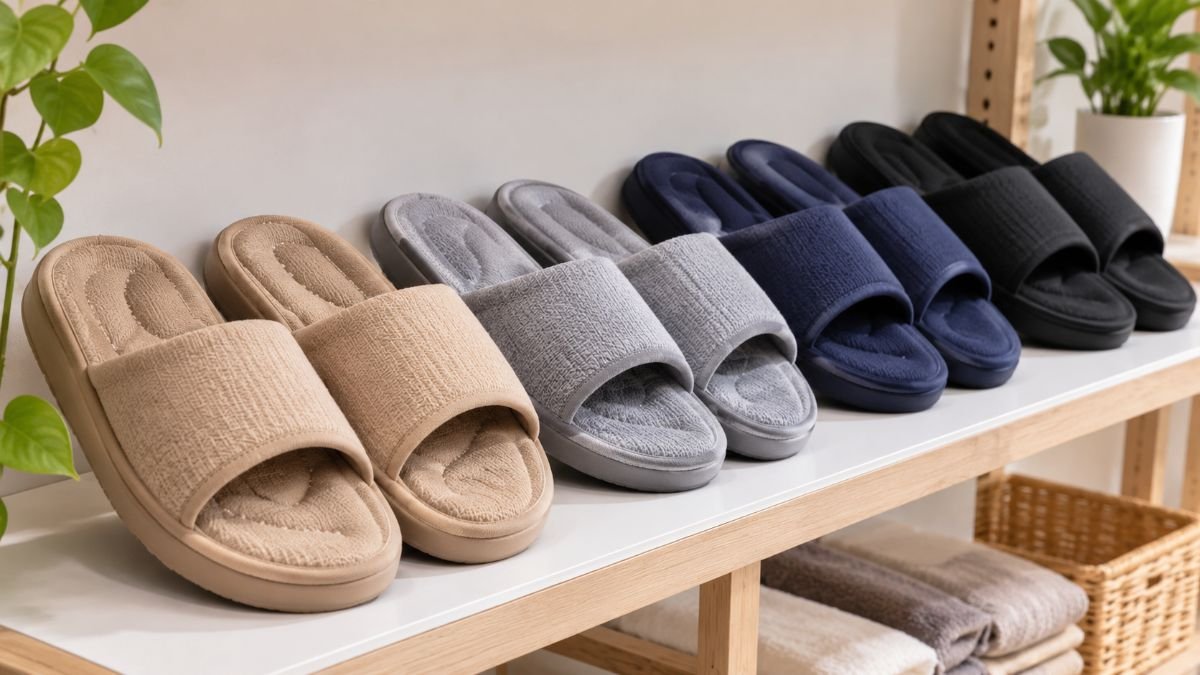
What “Orthopedic” Means on a Slipper in India
Walk into any footwear shop in India and you will see racks labelled orthopedic, ortho, doctor or medicated. There is no Indian standard that defines which slippers may carry these words. They describe how a slipper is built and marketed: usually thick and soft, often with a contoured footbed. The slipper standard IS 6721:2023 covers sandals and slippers in general and does not define orthopedic, MCR or MCP.
Meanwhile, the Bureau of Indian Standards has now set up a standard for therapeutic footwear, aimed at people with diabetes and high-risk feet. Our guide to the BIS IS 19956 standard explains it. That is separate from the soft retail slippers on the shelf.
Retail “Ortho” Slippers vs Prescribed Orthopaedic Footwear
The Pedorthic Association of Canada describes orthopaedic shoes as footwear designed to support or accommodate the mechanics and structure of the foot, ankle and leg, with features such as removable sock liners that make room for custom orthotics. The College of Pedorthists of Ontario standard on prescription footwear groups orthopaedic footwear into categories that run from non-modified off-the-shelf footwear to custom-made footwear for impairments that mass-produced shoes cannot accommodate. The NHS Highland patient leaflet on prescribed orthopaedic footwear describes shoes designed to meet your individual needs.
| Point | Retail “orthopedic” slipper | Prescribed orthopaedic footwear |
|---|---|---|
| Who decides | You, in a shop | A doctor, podiatrist, orthotist or pedorthist after an assessment |
| Made for | Average feet | Your foot, or a specific condition |
| Standards | No fixed meaning for the label | Clinical standards of practice and fitting |
| Typical features | Soft foam, contoured footbed, light weight | Removable insoles, extra depth, adjustable closures, sometimes custom parts |
| Best for | Everyday comfort for healthy or mildly sore feet | Deformity, high-risk feet, conditions mass-produced shoes cannot accommodate |
Based on the Pedorthic Association of Canada, the College of Pedorthists of Ontario and NHS Highland descriptions.
Both have a place. The mistake is to assume a retail slipper does what a prescribed device does.
Why the Word Is Everywhere
“Orthopedic” sells. People with sore heels, tired feet or ageing parents want something that sounds like it comes with medical backing, and shops respond by putting the word on any soft slipper. Brand names built around words like doctor, ortho and health add to the effect. None of that is dishonest in itself, because many of these slippers are comfortable. The problem starts when the word implies a function the product has not been shown to have. Treat it as a category label, similar to “sports” on a shoe, and look at the build.
It also helps to know that most retail pairs are made for the average foot. If your feet are wide, flat, high-arched or deformed, a mass-produced slipper may not fit the way the picture suggests, and that is where a professional assessment earns its keep.
Orthopedic-Style Slippers Shoppers Often Compare
These are examples of soft slippers listed online under orthopedic and comfort labels. They are retail slippers, not prescription footwear, and none is claimed to treat a condition.

Doctor Extra Soft Ultra Cushion Slippers for Men
Listed as lightweight men’s slippers for orthopedic and diabetic use.
View on Amazon.in
Ortho Joy Orthopedic Soft Slippers for Ladies
Listed as an MCR chappal for women for daily use.
See it on Amazon.in
Ortho + Rest Men Slipper
Listed as a super soft, lightweight men’s flip-flop for home and daily use.
See it on Amazon.in
YOHO ArchFlex Orthopedic Slippers for Women
Listed with arch support, anti-skid soles and light weight.
Compare on Amazon.in
Health Fit Extra Soft Diabetic and Orthopedic Slippers for Men
Listed as extra soft diabetic and orthopedic slippers for men.
See it on Amazon.in
Frido Cloud Comfort Slippers for Women and Men
Listed with two options: with arch support and without. Pick deliberately.
Check the optionsTry them on in Chennai
If you are in Chennai, you can try MCR and MCP chappals in person at our Choolaimedu store (No. 223, Choolaimedu High Road, near Gangai Amman Kovil, Chennai 600094). We are a footwear shop, not a clinic. WhatsApp us to check what is in stock before you travel.
Features That Actually Matter
- Cushioned but springy sole. Press the sole with a thumb. It should recover.
- Some arch contour. A gentle rise, not a hard hump.
- Heel hold. A back strap or closed back, because the NHS advises avoiding backless slippers for heel pain.
- Adjustable fastening for swelling and fit.
- Grip. Soft foam can be slippery on wet tiles.
- Room for the toes. No pinch at the front or sides.
Our men’s and women’s guides go deeper on each of these: orthopedic slippers for men and orthopedic slippers for women.
The Materials: MCR, MCP and EVA
Most “ortho” slippers on the shelf use one of three foams. MCR, micro cellular rubber, has a documented history in therapeutic footwear programmes, described in the Journal of Foot and Ankle Research paper. MCP has no fixed definition, as we explain in our MCR vs MCP guide. EVA is a common light foam, compared in our MCR vs EVA guide. The material name matters less than density, thickness and how the sole recovers after pressing.
Do Orthopedic Slippers Work? What the Evidence Says
For heel pain, the evidence on footwear and inserts is modest. A randomised trial in 108 adults found that moulded flip-flops improved foot pain over 12 weeks by a statistically significant amount that fell below what the authors counted as clinically important, so Chuter and colleagues treat them as a helpful extra. The NHS advises cushioned heels and good arch support for plantar fasciitis. For diabetic neuropathic feet, a 2004 study from a Chennai diabetes centre compared MCR sandals, polyurethane foam sandals and moulded insoles with patients’ own footwear, and the authors reported fewer new lesions with therapeutic footwear. That was prescribed footwear in a clinical setting, which is not the same as picking a pair from a shop rack.
Who Benefits From Which Kind
| Your situation | Reasonable starting point |
|---|---|
| Healthy feet, long hours at home or work | A good cushioned retail slipper or enclosed shoe |
| Mild heel or arch discomfort | A cushioned slipper with arch contour and heel hold, plus stretching and advice from a pharmacist or doctor |
| Persistent heel pain | See a doctor or podiatrist; footwear alongside their plan |
| Diabetes with normal sensation and no ulcer history | A well-fitting closed-toe cushioned pair, daily foot checks, doctor advice |
| Numbness, past ulcer, deformity | Assessment first; prescribed footwear may be needed |
| Older adult, fall risk | A grippy, secure pair; see our guides on elderly slippers |
General guidance, not medical advice.
What to Avoid
- Claims that a slipper cures or treats a condition.
- Backless flip-flops for heel pain.
- Very soft foam with no spring.
- Tall unstable platforms.
- Relying on the label alone.
Common Mistakes When Buying Orthopedic Slippers
- Buying by the word. The label is not a guarantee.
- Choosing the softest pair. Very soft foam can bottom out within weeks and give little support.
- Ignoring the heel. A slide with no heel hold makes the toes grip. The NHS advises avoiding backless slippers for heel pain.
- Buying the wrong size to “feel roomy”. A slipper that is too big moves and rubs, while one that is too small presses the toes.
- Expecting a cure. Footwear helps comfort. Persistent pain needs a diagnosis.
- Wearing one pair until it falls apart. Flattened foam stops cushioning long before it looks worn.
Buying Online or in a Shop
Online listings give material names, weights and photos, but you cannot press the sole or check the heel hold. If you buy online, read the size chart carefully, check which foam is named, look at the strap design and note the return policy. The products listed on this page link to online listings and we describe them using the seller’s own descriptions. In a shop you can fold the sole, compare two foams, try on in the evening and walk on a hard floor, which is the quickest way to learn what you actually like.
Questions to Ask the Seller
- Which foam is the sole made of, and what is its density or hardness grade?
- Is the footbed moulded or flat, and can an insole be added?
- What sizes does it come in, and is the fit true to size or narrow?
- Is the sole slip-resistant on wet tile?
- What is the return or exchange policy if the fit is wrong?
A seller who can answer these plainly is more useful than one who only repeats the word orthopedic. If the answer to the first question is “MCR” or “MCP”, our guides explain how much (or how little) those letters tell you. At our Choolaimedu shop you can ask us the same questions and press the soles yourself.
A Five-Minute Check in the Shop
- Press the heel and the ball of the sole for two seconds.
- Fold the slipper.
- Check the strap and heel hold.
- Try on in the evening.
- Walk on a hard floor.
Different Wearers, Different Needs
| Wearer | What matters most | Pointer |
|---|---|---|
| Office or shop staff on their feet | Closed supportive shoe at work, slipper at home | See our guide on slippers for standing all day when it is up |
| People with heel pain | Cushioned heel, arch contour, heel hold | Read our heel pain and plantar fasciitis guides |
| Older adults | Grip, easy fastening, stable base | Falls are the main risk with loose soft slides |
| People with diabetes | Doctor-led choice, closed toe, seamless interior | Read our diabetic slippers guide |
| Children | Growing feet need room and flexibility | Orthopedic labels are not needed for healthy children |
General pointers, not medical advice.
Myths About Orthopedic Slippers
- “Orthopedic means doctor approved.” The label has no approval process.
- “Thicker is better.” Thick foam that is soft and wide can wobble. A stable base matters.
- “Everyone with foot pain needs them.” Some pain needs a diagnosis, stretching or other treatment first.
- “They fix flat feet.” A slipper can offer comfort for flat feet, but it does not change the foot.
- “MCR is always the best material.” MCR is a good foam with a research history, but the specific pair still matters.
When Slippers Are Not Enough
See a doctor if pain is severe, worsening, has lasted more than two weeks, or comes with numbness or tingling, or if you have diabetes. See our guide on diabetic slippers before choosing for a person with diabetes.
Try Before You Buy in Chennai
Our Choolaimedu shop lets you compare MCR, MCP and EVA pairs on a hard floor and ask questions about sizing. Bring your doctor’s advice if you have one.
Caring for Your Pair
Wash with mild soap and water, dry in shade and avoid long sun exposure that can harden foam. Rotate two pairs and replace when the heel flattens or the sole wears unevenly. Do not leave foam slippers on a hot terrace or inside a closed car, because heat can warp the sole, and keep a separate pair for wet bathroom floors so your cushioned pair stays dry.
Frequently Asked Questions
What are orthopedic slippers?
In India the term is a marketing description for soft, cushioned slippers sold for comfort or foot pain. It is not a regulated grade.
Do orthopedic slippers work?
They can make everyday wear more comfortable, but evidence for their effect on pain is modest and they are not a treatment.
What is the difference between ortho slippers and prescribed footwear?
Prescribed footwear is made or modified after an assessment by a professional. Retail ortho slippers are mass-produced for average feet.
Are MCR slippers orthopedic?
MCR is a material with a history in therapeutic footwear. Whether a particular slipper is suitable depends on build and your foot.
Can I wear orthopedic slippers all day?
A closed supportive shoe is usually better for long work hours. Slippers suit home use.
Are orthopedic slippers good for diabetes?
Only after a foot check. Diabetes with numbness or past ulcers needs a doctor first.
How do I check if a slipper is good?
Press the sole, fold it, check the heel hold and fit it in the evening.
Is there an Indian standard for orthopedic slippers?
Not for the word itself. IS 6721 covers slippers generally and IS 19956 covers therapeutic footwear for high-risk feet.
The Short Version
“Orthopedic” on a slipper is a description, not a grade. Use it as a prompt to check the sole, heel hold, arch and fit, not as proof. Retail slippers help everyday comfort, prescribed footwear is for assessed needs, and persistent pain, numbness or diabetes always means seeing a doctor first.
Keep Reading
Related guides
Chennai
Sources
- BIS: IS 6721:2023 Sandals and Slippers, Specification (First Revision)
- Paul, Rajkumar, Mendis: Micro Cellular Rubber (MCR), a boon for leprosy affected patients, J Foot Ankle Res 2014
- Chuter, Searle, Spink: Flip-flop footwear with a moulded foot-bed for the treatment of foot pain, a randomised controlled trial, BMC Musculoskeletal Disorders 2016
- Viswanathan et al.: Effectiveness of different types of footwear insoles for the diabetic neuropathic foot, Diabetes Care 2004
- TeamLease RegTech: BIS notification establishing IS 19956:2026 Therapeutic Footwear, 14 October 2026
- Pedorthic Association of Canada: What are orthopaedic shoes?
- College of Pedorthists of Ontario: Standards of Practice, Prescription Footwear
- NHS Highland: Prescribed footwear (orthopaedic footwear)
- NHS: Plantar fasciitis
Some links on this page are affiliate links, so we may earn a small commission on qualifying purchases at no extra cost to you. See our affiliate disclosure. Foot-health content here is general information, not medical advice.


