
Diabetic Slippers in India: What the Evidence Says and How to Choose Safely
Quick answer: “diabetic slippers” sold online are usually soft, cushioned slippers, not prescription footwear. They can be a reasonable choice if your feet have normal feeling and no history of ulcers. If you have numbness, a foot wound, an old ulcer or a deformity, your doctor or podiatrist should advise on footwear first. International guidance says people at risk should not walk barefoot, in socks or in thin-soled slippers.
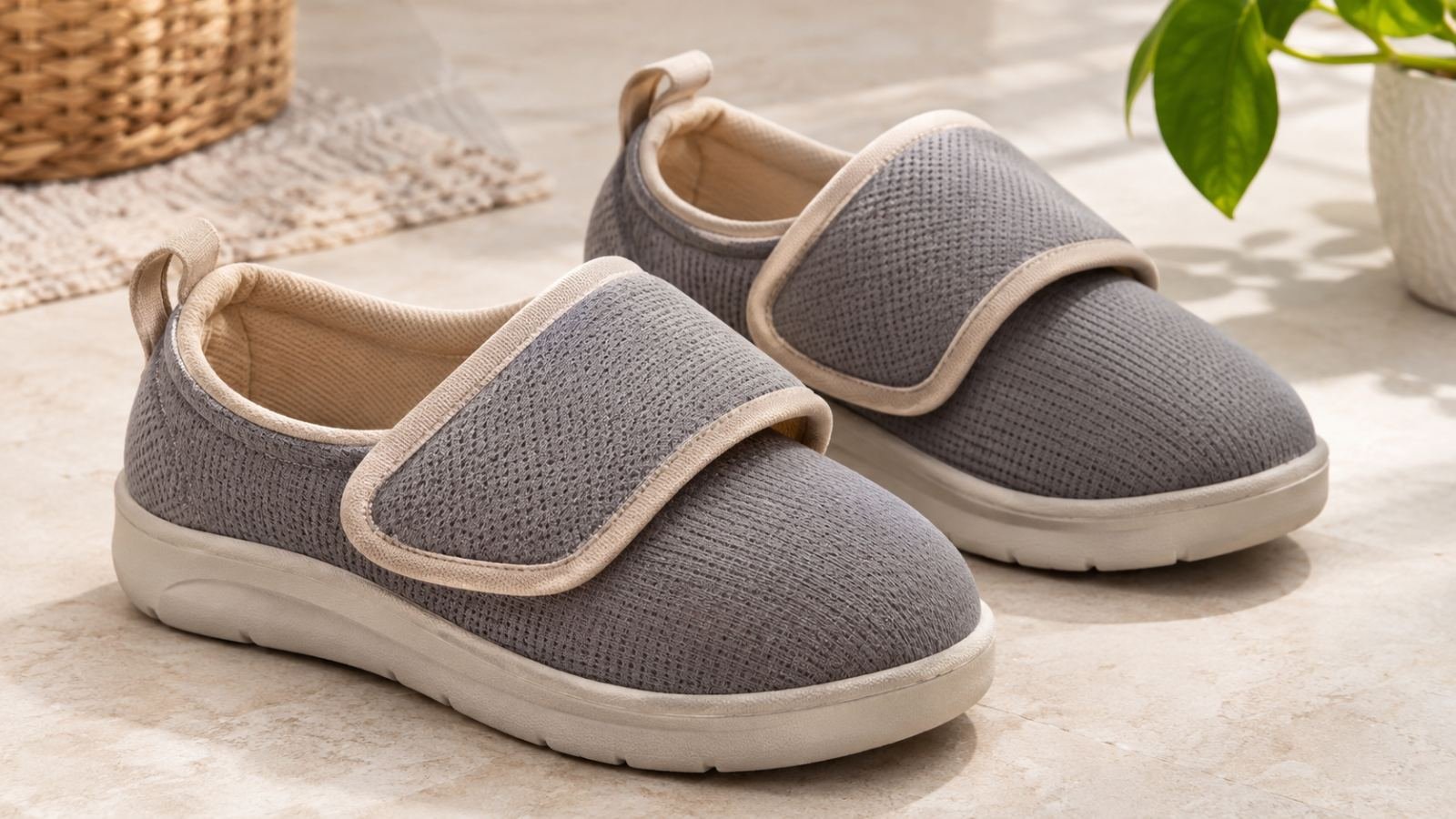
What “Diabetic Slippers” Means
There is no single definition. Online, “diabetic slippers” usually means soft, cushioned slippers with a wide fit. In clinics, therapeutic footwear is prescribed after a foot assessment for people with nerve damage, deformity or a past ulcer. A report on the Bureau of Indian Standards says IS 19956:2026, Therapeutic Footwear, was established in October 2026, and the 2025 draft scope covers footwear for diabetes, neuropathic at-risk feet and high risk of foot ulcers. A slipper sold as “diabetic” does not automatically meet that.
Why Diabetes Changes the Rules for Footwear
Diabetes can damage the nerves in the feet, so you may not feel a cut, blister or pressure spot. It can also reduce blood flow, which slows healing and raises the risk of infection, as described in the Ottawa Hospital’s patient information on foot care in diabetes. A small injury that goes unnoticed can turn into an ulcer. That is why footwear advice for people with diabetes is stricter than for everyone else: the goal is to prevent injury you cannot feel, not just to be comfortable.
The NHS Mersey Care foot care page puts the basic advice in a sentence: avoid walking barefoot, wear correctly fitting footwear, keep your feet clean, and check them every day. See Mersey Care NHS: Diabetes and foot care.
What the Research Says
Guideline. IWGDF 2023 says people with diabetes who are at risk of foot ulcers should not walk barefoot, in socks or in thin-soled slippers, indoors or outdoors, and should wear properly fitting footwear.
Chennai study on MCR. In a 2004 study published in Diabetes Care, researchers at a Chennai diabetes centre compared plantar pressure in people with neuropathy wearing MCR sandals, polyurethane foam sandals, moulded insoles or their own footwear. The therapeutic footwear groups had lower pressures, and the authors report new lesions in 33 percent of the own-footwear group compared with 4 percent of the others. Those were prescribed therapeutic sandals, not shop slippers, so the result cannot be applied to any MCR slipper.
Insoles. A 2024 review by Bus and colleagues looked at insole top covers and says choice should consider pressure relief and durability.
Soft Slippers online
These are examples of soft everyday slippers listed online. They are not prescription footwear, and none of them replaces advice from your own doctor or podiatrist. If you are at risk of ulcers, ask your doctor first.

Doctor Extra Soft Ultra Cushion Slippers for Men
Listed as lightweight men’s slippers for orthopedic and diabetic use.
View on Amazon.in
Doctor Extra Soft House Slipper for Women
The listing mentions MCR, orthopaedic, diabetic and acupressure features.
Check size and price
Ortho Joy Orthopedic Soft Slippers for Ladies
Listed as an MCR chappal for women for daily use.
See it on Amazon.in
Frido Cloud Comfort Slippers for Women and Men
Listed with two options: with arch support and without. Pick deliberately.
Check the options
Ortho + Rest Ortho Slippers for Women
A women’s daily-use orthopedic flip-flop, per the listing.
See it on Amazon.in
Doctor Health Super Soft Men's EVA Flip Flops
A thong-style EVA (not MCR) men’s slipper, useful as a comparison for softness.
See it on Amazon.inTry them on in Chennai
If you are in Chennai, you can visit our Choolaimedu store (No. 223, Choolaimedu High Road, near Gangai Amman Kovil, Chennai 600094) to see MCR and MCP chappals in person. We are not a clinic, so please bring your doctor’s footwear advice if you have one. WhatsApp us to check what is in stock.
What the Chennai MCR Research Does and Does Not Show
A 2004 study from a Chennai diabetes centre in Diabetes Care compared plantar pressure in people with neuropathy wearing MCR sandals, polyurethane foam sandals, moulded insoles or their own footwear. The three therapeutic footwear groups had lower pressures, and over the follow-up the authors reported new lesions in 33 percent of the own-footwear group compared with 4 percent of those wearing the prescribed pairs. The point is not that MCR is special. The point is that footwear chosen after an assessment, with pressure-relieving soles, outperformed the person’s own shoes. A shop slipper is not prescribed footwear, so do not read the 4 percent figure as a promise about anything you can buy on the shelf.
The 2014 paper in the Journal of Foot and Ankle Research on the Mission programme reports more than a million pairs of MCR insoles made at a unit in Vizianagaram, which shows how widely cellular rubber has been used in Indian foot care, again in a clinical programme.
Who Is Low Risk, and Who Is Not
| Your situation | What it usually means for footwear |
|---|---|
| Diabetes, normal feeling, no ulcer history, no deformity | A well-fitting, closed-toe cushioned slipper from a shop can be reasonable for indoor use, with daily checks |
| Numbness, burning, tingling | See your doctor or podiatrist. Footwear choice should be guided by an assessment |
| Past ulcer, amputation, or deformity (claw toes, Charcot foot) | Needs prescribed or specialist footwear. Do not rely on shop slippers |
| A wound, blister or colour change that is not healing | Medical attention, not a new slipper |
This table summarises common guidance. Your own doctor or podiatrist decides what is right for your feet.
Safe Features to Look For
| Feature | Why |
|---|---|
| Closed toe or toe protection | Guards against knocks and cuts when you cannot feel them |
| Wide, deep toe box | Avoids pressure on toes and deformities |
| Adjustable fastening | Allows for swelling through the day |
| Soft, seamless inside | Reduces rubbing and blisters |
| Thick cushioned sole | Spreads pressure; thin soles are advised against by IWGDF |
| Non-slip tread | Cuts fall risk on tile |
Check inside the slipper by hand every time for stones, rough seams or tears.
What a Scottish NHS Footwear Leaflet Recommends
NHS Scotland’s My Diabetes My Way programme publishes a footwear leaflet for people with diabetes. Two points stand out. It recommends footwear with a fastening, such as laces, a strap or Velcro, because it keeps the foot firmly in place and prevents rubbing, and it advises avoiding slip-on shoes and slippers, as they give less support. It also suggests keeping the heel low, no more than 3 centimetres. Read it on the My Diabetes My Way footwear advice page. That is a useful reality check on the word “slipper”: if a slipper has no fastening and no heel hold, it is on the cautious list even before you add the diabetes.
The Two-Minute Daily Foot Check
Checking your feet every day is the simplest thing you can do. Use a mirror if you cannot see the soles. Look for redness, blisters, cuts, cracks, swelling, colour change or any hard skin that is new. Check between the toes. Then check inside your slippers and shoes by hand before you put them on, for stones, rough seams or a torn lining. The Mersey Care page recommends examining your shoes for anything that might hurt your feet.
Wear clean socks that are not too big or too small, because wrinkled or tight socks can cause pressure. The Ottawa Hospital page describes socks as smooth, seam-free and not tight at the ankle. If you find anything unusual, do not wait to see if it heals. Contact your doctor or diabetes care team.
Never Barefoot, Even at Home
Most foot injuries in people who cannot feel their feet happen at home, because that is where people let their guard down. Mersey Care advises never walking barefoot indoors or outdoors. The IWGDF 2023 guideline says the same for people at risk of ulcers and adds that socks alone and thin-soled slippers are not enough. So a thin flat chappal, a thong or a worn-out slide does not count as protection. A closed-toe, cushioned, properly fitting slipper kept beside the bed, so your feet are protected from the first step in the morning, does.
What to Avoid
- Thin, flat chappals and thongs, which give no protection.
- Walking barefoot or in socks, even indoors.
- Tight straps, rough stitching or a size too small.
- Heat sources like hot water bags on numb feet.
Skin, Nails and Water Temperature
Slippers are only one part of foot protection. The Ottawa Hospital guidance advises using a non-perfumed, alcohol-free cream on dry skin but never between the toes, checking water temperature before bathing your feet, trimming nails straight across and level with the toe tip, never using razors or knives on your feet, and using a pumice stone or foot file rather than cutting calluses. A podiatry service at Rotherham, Doncaster and South Humber NHS Foundation Trust adds a warning: never use over-the-counter corn or verruca treatments, because they contain acid that can damage the skin and create wounds. See their foot care advice.
Heat, Hot Floors and Monsoon Wet
In Chennai, summer pavements and terrace floors get hot enough to burn skin quickly, and a person with reduced sensation may not notice until the damage is done. Wear closed protective footwear outdoors in summer, and avoid hot water bags or heaters on your feet. During the monsoon, wet feet soften skin and invite fungal infection, so dry thoroughly, especially between the toes, and let slippers dry fully between wears. Do not walk through floodwater barefoot.
If You Are Buying for a Parent or Grandparent With Diabetes
This is one of the most common reasons people come into the store. Three questions help. First, has anyone checked their feet recently? If they have numbness, a wound or a past ulcer, take them to a doctor or podiatrist before buying. Second, can they put the slipper on and take it off safely? A fastening they can manage is better than a tight fixed strap they struggle with. Third, will they actually wear it? A pair left in the cupboard protects nobody. Choose a pair they find comfortable and let them try it on.
How Long to Wear a New Pair on the First Day
New footwear can rub in places you will not notice if sensation is reduced. Many foot specialists suggest building up gradually: wear new footwear for an hour or two at first, then check your feet for red marks, and increase wearing time only if the skin looks fine. This is a general safety habit, not a prescription, so follow any advice from your own foot care team.
Myths About Diabetic Slippers
- “If it says diabetic, it is safe.” The label is not a regulated grade for shop slippers. Check the fit and features yourself.
- “Softer is always safer.” Very soft foam can bottom out and give little protection. Cushioning that holds its shape is better.
- “I cannot feel anything, so it must not be hurting.” That is exactly the risk. Reduced feeling hides injury, which is why daily checks matter.
- “Indoor floors are safe, so slippers are optional.” Guidance from the NHS and IWGDF says to avoid walking barefoot indoors as well as outdoors.
- “One good pair is enough.” Alternating pairs lets footwear dry out and spreads the wear.
Practical Answers to Common Questions
Can a person with diabetes wear MCR slippers? If feeling is normal, there is no ulcer history and the pair fits well, a good cushioned MCR slipper can be reasonable for indoor use. If feeling is reduced or there is any history of ulcers, get a foot assessment first.
Is it fine to wear sandals outdoors? Open sandals and thongs leave toes exposed to knocks, stones and heat. Closed-toe footwear is the safer outdoor choice, and the IWGDF guidance on avoiding barefoot, socks-only and thin-soled slippers applies outdoors too.
How often should I get my feet checked? The Diabetes UK and NHS services in the UK offer an annual foot check. Ask your own doctor how often your feet should be examined, because the interval depends on your risk.
Buying a Slipper If You Have Diabetes
- Check inside with your hand every time, before wearing.
- Try them on in the evening, when feet are largest, with the socks you wear.
- Look for a fastening that lets you loosen the fit if the feet swell.
- Avoid seams and stitching on the inside of the toe box.
- Replace the pair at the first sign of a hole, rough patch or flattened sole.
If you are in Chennai, you are welcome to bring your current footwear to the store and compare it with a few options. We cannot assess your feet, but we can help you check fit and features, and we will tell you if something is not suitable for your situation.
See a Doctor First If You Have
Get a foot check before buying
- Numbness, burning or tingling in the feet.
- A wound, blister, callus or colour change that does not heal.
- A past foot ulcer or amputation.
- Foot deformity such as claw toes or a Charcot foot.
Any new wound on a diabetic foot needs prompt medical attention.
Frequently Asked Questions
What are diabetic slippers?
Usually soft, cushioned, wide-fit slippers. Prescription therapeutic footwear is a separate thing, fitted after a foot assessment.
Are MCR slippers good for diabetics?
A Chennai study found therapeutic MCR sandals lowered plantar pressure in people with neuropathy, but those were prescribed. Ask your doctor before choosing MCR slippers.
Can diabetics wear chappals at home?
IWGDF advises people at risk of ulcers not to walk barefoot, in socks or in thin-soled slippers. A cushioned closed slipper is usually safer than flat chappals; ask your doctor.
Should diabetic slippers be closed toe?
Often yes if you have reduced feeling, since closed toes protect from knocks. Your doctor can advise.
Do diabetic slippers cure foot problems?
No. They can reduce pressure and rubbing, but they do not treat diabetes or neuropathy.
How often should I check my feet?
Guidelines advise daily checks of both feet and inside the shoes. Ask your care team for your own plan.
Is there an Indian standard for therapeutic footwear?
BIS IS 19956:2026 has been reported.
Where can I see MCR slippers in Chennai?
Urban Style Footwear, Choolaimedu. WhatsApp +91 90808 61559.
The Short Version
Soft slippers are not a substitute for a foot check. If your feet have numbness, a wound or a past ulcer, see your doctor before choosing footwear. If not, choose cushioned, wide, closed or well-strapped slippers and check inside them daily.
Keep Reading
Related guides
Sources
- IWGDF: Guidelines on the prevention of foot ulcers in persons with diabetes, 2023 update
- Viswanathan et al.: Effectiveness of different types of footwear insoles for the diabetic neuropathic foot, Diabetes Care 2004
- Paul, Rajkumar, Mendis: Micro Cellular Rubber (MCR), a boon for leprosy affected patients, J Foot Ankle Res 2014
- TeamLease RegTech: BIS notification establishing IS 19956:2026 Therapeutic Footwear, 14 October 2026
- BIS: Draft Indian Standard, Therapeutic Footwear Specification (MHD 09), July 2025
- Mersey Care NHS: Diabetes and foot care
- Rotherham, Doncaster and South Humber NHS Foundation Trust: Foot care advice
- NHS Scotland My Diabetes My Way: Footwear advice
- The Ottawa Hospital: Foot care tips for people with diabetes
Some links on this page are affiliate links, so we may earn a small commission on qualifying purchases at no extra cost to you. See our affiliate disclosure. Foot-health content here is general information, not medical advice.


