
Ball of Foot Pain: Slipper Features That Ease the Load
Quick answer: Pain in the ball of the foot is called metatarsalgia. The NHS advises shoes with plenty of room, a low heel and a soft sole, plus soft insoles or pads, rest, and avoiding long spells of walking or standing. In a slipper, look for a roomy toe area, soft forefoot cushioning, a low heel and a secure fit. A rocker sole may help some people, but the evidence is mixed. See a GP if pain has not improved after 2 weeks, you feel tingling or numbness, or you have diabetes.
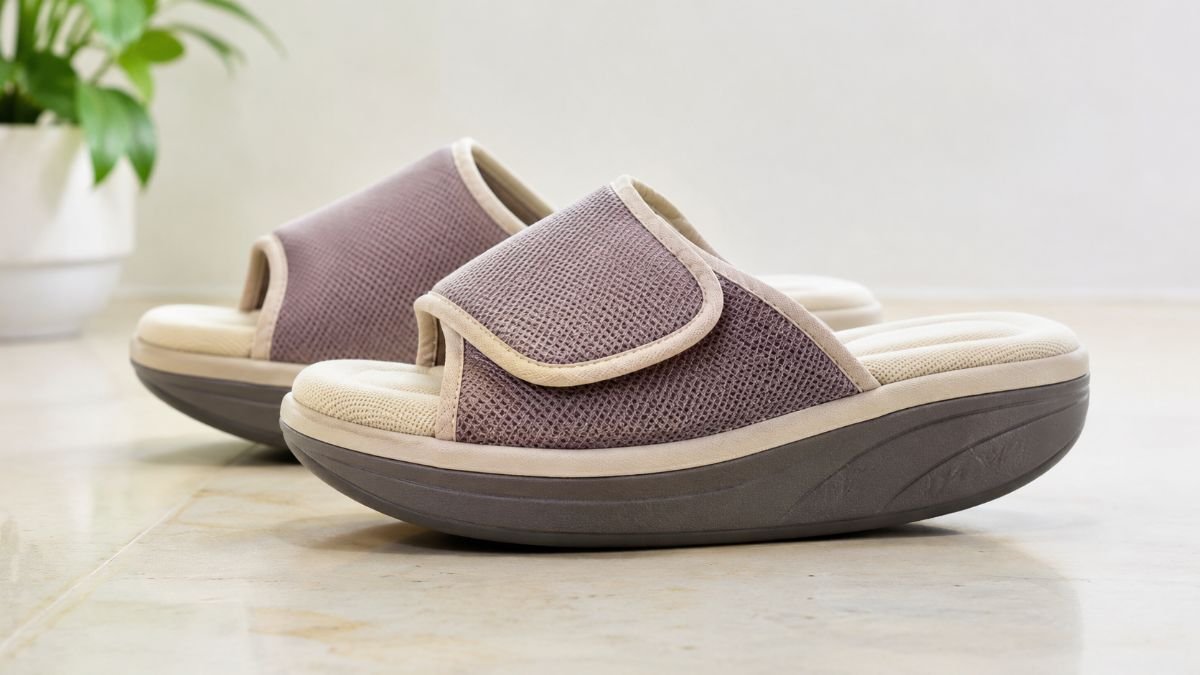
What Forefoot Pain Is
The ball of the foot is the padded area under the base of the toes. The NHS calls pain here metatarsalgia and says it is often caused by exercise such as running, shoes that are too tight, or a condition such as arthritis. A foot shape that puts extra pressure on the ball of the foot, hard or cracked skin and a verruca can also cause it. The NHS lists specific causes with typical symptoms: a sprain, a Morton neuroma (sharp, burning or shooting pain near the toes, sometimes like a lump or small stone under the foot), bursitis (redness, swelling and a dull ache) and bunions (a hard, bony lump near the big toe).
That list matters for slipper choice because different causes want different things. A bunion needs a wider front. A neuroma dislikes squeezing. Hard skin and a verruca need a soft surface. A slipper cannot diagnose any of these, but it can avoid making them worse.
What the NHS Advises
For pain in the ball of the foot, the NHS suggests wearing shoes with plenty of room for your feet, a low heel and a soft sole, using soft insoles or pads, avoiding high heels and tight, pointy shoes, resting and raising the foot, using an ice pack wrapped in a towel for up to 20 minutes every 2 to 3 hours, and avoiding walking or standing for long periods. A pharmacist can advise on painkillers and on insoles and pads. The NHS says to see a GP if the pain stops you doing normal activities, is getting worse or keeps coming back, has not improved after 2 weeks of home treatment, comes with tingling or loss of feeling, or if you have diabetes. It advises urgent help if you have severe pain or cannot walk, the foot has changed shape, you heard a snap or pop, you feel faint or sick from the pain, or the foot is hot, swollen and painful.
What a Slipper for Ball-of-Foot Pain Should Have
| Feature | What it does | What to check |
|---|---|---|
| Roomy toe area | Avoids squeezing the forefoot, bunions and neuromas | Toes spread without touching the sides |
| Soft forefoot cushioning | Spreads pressure under the ball of the foot | Press under the ball. It should sink a little and spring back |
| Low, broad heel | Keeps weight off the forefoot | Heel no higher than the NHS suggests: low |
| Gentle rocker or rolling sole | May reduce push-off pressure | Sole should roll smoothly, not feel unstable |
| Secure heel | Prevents sliding forward onto the toes | Strap or closed back |
| No seams over the ball of the foot | Avoids rubbing | Run a finger over the inside |
| Grip | Safety | Patterned tread |
Matches NHS footwear advice.
Soft Forefoot Slippers Shoppers Often Compare
These are examples of cushioned slippers listed online. None is claimed to treat metatarsalgia. See a doctor if pain lasts 2 weeks.

Doctor Extra Soft Ultra Cushion Slippers for Men
Listed as lightweight men’s slippers for orthopedic and diabetic use.
View on Amazon.in
Doctor Extra Soft House Slipper for Women
The listing mentions MCR, orthopaedic, diabetic and acupressure features.
Check size and price
Ortho Joy Orthopedic Soft Slippers for Ladies
Listed as an MCR chappal for women for daily use.
See it on Amazon.in
MCR Healthcare Women's Orthopedic Soft Slippers
Listed as lightweight women’s chappals/sandals/slippers for orthopedic and diabetic use.
Compare on Amazon.in
YOHO ArchFlex Orthopedic Slippers for Women
Listed with arch support, anti-skid soles and light weight.
Compare on Amazon.in
Frido Cloud Comfort Slippers for Women and Men
Listed with two options: with arch support and without. Pick deliberately.
Check the optionsTry them on in Chennai
If you are in Chennai, you can try MCR and MCP chappals in person at our Choolaimedu store (No. 223, Choolaimedu High Road, near Gangai Amman Kovil, Chennai 600094). We are a footwear shop, not a clinic. WhatsApp us to check what is in stock before you travel.
Why the Ball of the Foot Takes So Much Load
When you walk, your weight rolls from the heel to the ball of the foot and off the toes. At push-off, a large share of body weight passes through the heads of the long bones behind the toes, the metatarsal heads, which are only cushioned by a thin fat pad. If that pad is thin, if the toes are cramped, or if a raised heel throws weight forward, the load concentrates and the area becomes sore. That is why the NHS advice focuses on room, a low heel and a soft sole: each of those spreads or reduces the load on the forefoot.
This also explains why the same person can have no pain in trainers and ache in a thin, flat slipper. The slipper may be cushioned in the heel but flat under the ball, or it may lack the room for the toes to splay, so the pressure goes to the same few points with every step. Age can matter too: the fat pad under the forefoot thins in many people over time, making cushioning more important.
Do Rocker Soles Help?
A rocker sole has a curved shape that rolls the foot forward and is often promoted for ball-of-foot pain. The honest answer is that evidence is mixed. A study summarised in a podiatry journal article on treating metatarsalgia examined 42 patients with primary metatarsalgia and compared custom and prefabricated orthotics with and without a rocker bar. Pain scores were significantly lower with the custom-moulded insole, while the rocker bar showed no influence on pain scores. Other work in runners with forefoot pain found a rocker element reduced pressure in walking but made the shoe heavier. In practice, a gentle rolling sole can be comfortable for some people, and it is not a guaranteed fix.
Slippers marketed with rocker soles are usually mild. If a doctor or podiatrist has prescribed a rocker-sole shoe or an orthotic, follow that advice and do not replace it with a retail slipper.
Slipper Notes for Each Common Cause
| Cause (NHS) | Slipper notes |
|---|---|
| Tight shoes or high heels | Roomy toe area, low heel, soft sole |
| Morton neuroma | Wide front, no squeezing, soft forefoot. See a GP if burning or tingling persists |
| Bunion | Wide, soft front with no seam over the lump. Our foot pain guide lists more |
| Hard skin or verruca | Soft sole and soft forefoot, avoid friction |
| Bursitis | Soft footbed, roomy fit |
| Arthritis | Soft, light, roomy, easy fastening |
| Sprain after exercise | Rest and follow medical advice |
Based on the NHS list of causes.
Slipper Styles Compared for the Forefoot
| Style | Forefoot effect | Notes |
|---|---|---|
| Thin flat chappal | Little cushioning, no toe room guarantee | Often too flat under the ball |
| Soft thick EVA or MCR slide with strap | Good cushion if it recovers | Check strap does not press on the top |
| Closed-toe slipper | Protects toes, can be tight at the front | Check toe room |
| Rocker or rolling sole slipper | May reduce push-off load | Heavier, can feel unstable at first |
| Toe-post thong | Toes grip to hold it | Usually poor for forefoot pain |
| Backless mule | Slips forward, loads toes | Avoid for sore forefoot |
General comparison.
Our guide to whether slippers can cause foot pain explains why toe-post and backless styles often make forefoot pain worse.
Material and Thickness at the Forefoot
Forefoot comfort depends on how thick and how soft the sole is under the ball of the foot, and on how well it recovers. A thin flat sole offers little cushion. A very thick, soft sole can feel unstable, and a thick sole that is too stiff pushes the toes up and makes pressure worse. Look for a moderate thickness at the forefoot, a soft top layer and a firmer base. MCR and good EVA both work. Our guide to MCR vs EVA compares them, and slipper materials gives the full picture.
A Shop Test for Forefoot Comfort
- Put the slipper on and stand with your weight on the forefoot by rising slightly onto your toes. The area under the ball should feel cushioned, not bottomed out.
- Walk quickly on a hard floor and notice whether the front of the slipper folds, squeezes or pinches.
- Slide your foot forward in the slipper. If the toes hit the front, the heel hold is too loose.
- Wiggle your toes. They should spread without touching the sides.
- Press the sole under the ball of the foot with a thumb and check it recovers.
If any of these fail, the slipper is unlikely to help ball-of-foot pain, whatever the label says.
Common Mistakes
- Buying a slipper that is a size too small for a snug look.
- Choosing a thin sole because it feels light.
- Believing a rocker sole fixes the cause.
- Wearing toe-post chappals with a painful forefoot.
- Waiting out pain that has not improved in 2 weeks.
- Ignoring tingling or burning near the toes, which the NHS lists as a reason to see a GP.
Fit Checklist
- Try in the evening, when feet are largest.
- Stand and check there is room across the widest part of the foot.
- Look for space ahead of the longest toe.
- Press the sole under the ball of the foot.
- Walk on a hard floor and note where pressure builds.
- Check the heel holds.
- Try the other foot too. Feet can differ.
Care, Replacement and Rotation
A forefoot cushion is only as good as the foam under it. Foam flattens first under the ball of the foot, where load is greatest, so check there first when you inspect an old pair: if the sole is visibly thinner under the ball than at the edges, or your foot feels the floor through it, replace it. Wash gently, dry in shade and rotate two pairs so each has a day to recover. Keep a firm pair for walking and a softer pair for rest if you can.
Finally, pay attention to what changes when you switch pairs. If a new slipper helps, note what feature is different. If it makes things worse, return it early rather than hoping the foot will adapt. Pain that persists or worsens should be seen by a doctor, because ball-of-foot pain has causes that a slipper cannot address. Bring your worn pair to the appointment, because the wear pattern under the forefoot can show how you load the foot and may help the doctor decide whether you need an insole, a different shoe or a closer look at the nerve and joints.
Other Habits That Help
- Avoid high heels and tight, pointy shoes, as the NHS advises.
- Rest and raise the foot.
- Use soft insoles or pads from a pharmacist where the shoe allows.
- Do the gentle exercises on the NHS page.
- Change your routine if one activity triggers the pain.
- Check skin for hard patches or cracks.
Choosing in Chennai
Chennai’s heat swells feet by evening, which makes forefoot pressure worse. Try slippers late in the day. At our Choolaimedu shop you can press the forefoot, check the toe room and walk on a hard floor.
When to See a Doctor
See a GP if the pain stops you doing normal activities, is getting worse or keeps coming back, has not improved after 2 weeks of home care, comes with tingling or numbness, or you have diabetes. Seek urgent help for severe pain, an inability to walk, a changed foot shape or a hot, swollen, painful foot. Read diabetic slippers if you have diabetes.
Frequently Asked Questions
What slippers are best for pain in the ball of the foot?
Roomy toe area, soft forefoot cushioning, low heel and secure fit. The NHS advises shoes with plenty of room, a low heel and a soft sole.
What is metatarsalgia?
The NHS term for pain in the ball of the foot. It has several causes, including tight shoes, overuse, arthritis and Morton neuroma.
Do rocker sole slippers help forefoot pain?
Evidence is mixed. One study of 42 patients found custom insoles lowered pain while a rocker bar showed no influence on pain scores. A gentle rocker may feel comfortable but is not a guaranteed fix.
Can slippers cause ball of foot pain?
Thin flat slippers, high heels and tight fits can. A soft roomy slipper is kinder.
Should I use a pad in my slipper?
The NHS suggests soft insoles or pads for ball-of-foot pain. Ask a pharmacist, and only use them if the slipper has room.
When should I see a doctor about ball of foot pain?
If it stops normal activity, worsens or recurs, has not improved after 2 weeks, comes with tingling or numbness, or you have diabetes.
What does Morton neuroma feel like?
The NHS describes sharp, burning or shooting pain near the toes, sometimes like a lump or stone under the foot.
Are MCR slippers good for forefoot pain?
A soft MCR sole with a roomy toe area can be comfortable. Check that the forefoot recovers after pressing.
The Short Version
For ball-of-foot pain choose a roomy, low-heeled slipper with a soft forefoot and a secure heel, as the NHS advises. Rocker soles may help some people but evidence is mixed. See a GP if pain lasts 2 weeks, comes with tingling or you have diabetes.
Keep Reading
Related guides
Chennai
Sources
- NHS: Pain in the ball of the foot (metatarsalgia)
- Podiatry Today: Biomechanical considerations in treating metatarsalgia
- Run Blogger: Can rocker-soled shoes benefit runners with forefoot pain
- NHS: Heel pain
Some links on this page are affiliate links, so we may earn a small commission on qualifying purchases at no extra cost to you. See our affiliate disclosure. Foot-health content here is general information, not medical advice.


