
Is Your Slipper Behind the Ache? Signs and Fixes
Quick answer: Yes, slippers can contribute to foot pain, mostly through poor fit, no heel hold, thin or flattened soles, and styles that make your toes grip. A narrative review of 18 studies found that between 63% and 72% of people wore shoes that did not suit the width or length of their feet, and that incorrect fit was associated with foot pain and disorders. A well-fitted, cushioned slipper with a heel hold is far less likely to cause trouble. If pain lasts 2 weeks or more, see a doctor.
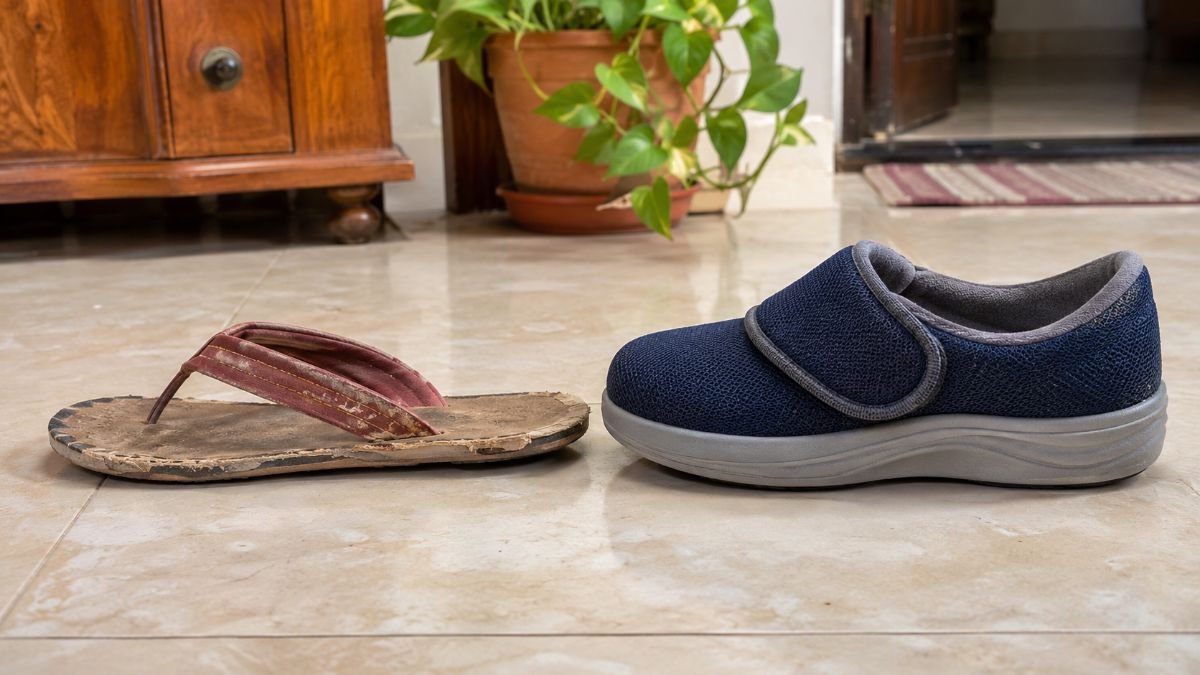
The Short Answer
A slipper does not usually cause a foot condition on its own, and it is hard to prove cause in any single case. What research does show is that footwear that does not fit is linked to foot pain. A narrative review in the Journal of Foot and Ankle Research by Buldt and Menz searched 1,681 citations, included 18 articles and found that between 63% and 72% of participants wore shoes that did not accommodate the width or length of their feet. Incorrect fit was associated with foot pain and with foot disorders such as lesser toe deformity, corns and calluses. Older people and people with diabetes were more likely to wear shoes that were too narrow, with figures between 46% and 81%. The authors called for better fitting education and a wider range of sizes and widths.
That review is about shoes in general, not slippers specifically, and association is not proof of cause. But the logic carries over. A slipper is footwear, and a badly fitted or badly built one is a likely contributor to the same problems. The good news is that the causes are easy to check.
How a Slipper Can Make Foot Pain Worse
| Problem | What happens | Fix |
|---|---|---|
| Too narrow or tight | Squeezes the forefoot and toes. The NHS lists tight shoes among causes of ball-of-foot pain | Choose a roomier fit with a wide toe area |
| Too loose or backless | Toes grip to hold it on, heel slides, strain builds | Heel strap or closed back |
| Thin, flat sole | Little cushioning on hard floors. The NHS says standing on hard surfaces can cause heel pain | Cushioned sole that recovers |
| Flattened, worn foam | Support is gone. The foot loads unevenly | Replace on time |
| Hard or too-high arch bump | Presses on the arch | Gentle contour only |
| High or uneven heel | Pushes weight to the forefoot | Low, broad heel |
| Slippery sole | Slips, awkward steps, muscle strain | Patterned tread |
| Toe post (thong) style | Toes grip constantly | Avoid with forefoot or toe pain |
Based on NHS foot pain pages and the Buldt and Menz review.
Signs Your Slippers May Be the Problem
- Pain starts or worsens after you begin wearing a new pair.
- Red marks, blisters or sore spots on the toes, heel or top of the foot.
- Your toes curl or grip when you walk.
- The sole is visibly flat or uneven under the heel or ball of the foot.
- You feel the floor through the sole.
- Your foot slides inside the slipper.
- Pain eases when you wear a shoe or go barefoot on a soft surface.
None of these proves the slipper is the cause, but each is a reason to try a different pair before assuming something deeper is wrong.
Supportive Slippers Shoppers Often Compare
These are examples of slippers listed online with closed heels or cushioned footbeds. None is claimed to treat a condition. If pain lasts, see a doctor.

Doctor Extra Soft Ultra Cushion Slippers for Men
Listed as lightweight men’s slippers for orthopedic and diabetic use.
View on Amazon.in
Doctor Extra Soft House Slipper for Women
The listing mentions MCR, orthopaedic, diabetic and acupressure features.
Check size and price
Ortho Joy Orthopedic Soft Slippers for Ladies
Listed as an MCR chappal for women for daily use.
See it on Amazon.in
YOHO ArchFlex Orthopedic Slippers for Men
Listed with arch support, anti-skid soles and light weight.
Compare on Amazon.in
Frido Cloud Comfort Slippers for Women and Men
Listed with two options: with arch support and without. Pick deliberately.
Check the options
Ortho + Rest Ortho Slippers for Women
A women’s daily-use orthopedic flip-flop, per the listing.
See it on Amazon.inTry them on in Chennai
If you are in Chennai, you can try MCR and MCP chappals in person at our Choolaimedu store (No. 223, Choolaimedu High Road, near Gangai Amman Kovil, Chennai 600094). We are a footwear shop, not a clinic. WhatsApp us to check what is in stock before you travel.
Toe Gripping and Why Backless Styles Strain the Foot
When a slipper has no heel strap, your body compensates without you noticing. The toes curl down to hold the slipper on, the shin muscles work harder to lift the front of the foot so the slipper does not slap, and your stride shortens. Over a day of housework this adds up to tired toes, an aching arch and sometimes shin or calf soreness. It also changes how you place the foot. Many people who wear backless slippers all day shuffle, which raises the chance of catching a toe on a rug or a step.
A strap across the heel or a closed back lets the foot relax inside the slipper. That is the single most helpful change for most people and costs almost nothing. If you love the look of a slide, consider a pair with an adjustable heel strap that you can flip down when you want it easy to slip on.
Barefoot, Socks or Slippers: Which Is Kinder?
Going barefoot on hard floors is not a safe default for sore feet. The NHS advises avoiding walking barefoot on hard surfaces with plantar fasciitis. A cushioned, supportive slipper is usually kinder than bare feet on tile. A thin, flat, loose slipper may be no better than barefoot, and for people at risk of falls it may be worse. Our guide on slippers vs barefoot at home compares the options in more depth.
Width and Length: The Fit Problem Behind Most Pain
The Buldt and Menz review concluded that a large share of people wear footwear that is the wrong size, with width the most common problem. Most slippers in shops come in one width, so a wide forefoot or a high instep gets squeezed. Signs are red marks on the sides of the foot, a bulge of foot over the edge of the sole and toes pressed against the front. The same review noted a link between incorrect fit and lesser toe deformity, corns and calluses, which are slow to appear and slow to go.
| Check | If it fails |
|---|---|
| Thumb of space beyond the longest toe | Too short. Size up or choose another style |
| Foot sits within the edges of the sole | Too narrow. Look for a wider cut |
| Strap closes without cutting in | Too tight at the instep. Choose an adjustable strap |
| Heel stays in place when you walk | Too loose or wrong shape. Choose a heel hold |
| No red marks after an hour | If marks appear, return the pair |
Simple checks. Try in the afternoon.
If you have a wide or narrow foot, tell the shop. Many can suggest a style that suits.
How to Check Your Slippers Right Now
- Stand on a hard floor in them for a full minute.
- Look at where your foot overhangs the sole, if anywhere.
- Press the sole under the heel and ball of the foot. It should compress a little and recover.
- Fold the slipper. It should bend at the ball, not in the middle.
- Check the heel. Does your foot slide or does your toes grip?
- Look at the tread. Is it smooth or worn?
- Compare to a new pair of the same style.
If You Think Your Slippers Caused the Pain
- Stop wearing the pair you suspect for a few days and use a supportive alternative.
- Note whether pain eases. Write down where it hurts and when.
- Check the fit and wear using the list above.
- Switch to a pair with a roomier toe area, a cushioned sole and a heel hold.
- Rest, and ice a sore area wrapped in a towel for up to 20 minutes every 2 to 3 hours, as the NHS advises for heel and ball-of-foot pain.
- If it is not better in 2 weeks, see a doctor.
This sequence is practical and cheap, and it tells you quickly whether footwear is the main cause or only a contributor.
Who Is Most at Risk From Poor Slippers
Older adults, people with diabetes or numb feet, people with swollen feet, people with flat feet or high arches, and people who stand for long hours are all more likely to notice poor footwear. For older adults, slippers appear often in indoor falls, as our guide on slippers for the elderly explains. For people with diabetes, a poor slipper can cause a pressure sore without pain, which is why diabetic slipper advice is stricter.
Children, Teens and Pregnancy
Children grow out of footwear fast, and a pair that fit in the shop can be tight within months. Check toe room often. Teenagers wearing thin flat slides all day on hard floors may notice heel ache. In pregnancy feet swell and flatten slightly, so fit may change midway through, and sudden swelling of the face, hands or feet with headache or vision changes is an emergency that needs urgent medical advice. In each case, the same fit checks apply, and our guides on swollen feet and flat feet cover more.
What a Safer Slipper Looks Like
| Feature | Why |
|---|---|
| Fits width and length | Fit is the single biggest link to foot pain in the review |
| Roomy toe area | Avoids squeeze |
| Cushioned sole that recovers | Handles hard floors |
| Heel strap or closed back | Stops toe gripping |
| Gentle arch contour | Spreads load without pressing |
| Low, broad heel | Keeps weight balanced |
| Patterned tread | Grip |
General features.
What the Evidence Cannot Tell Us
It helps to be honest about what is known. The review of fit and foot pain is a narrative review, and most of the studies are cross-sectional, which means they show that poor fit and foot pain tend to appear together without proving that one caused the other. There is no good trial that randomised people to wear a particular slipper and then measured pain. So the safest summary is this: a badly fitting slipper is a reasonable suspect, it is cheap to rule out, and changing it carries little risk.
Meanwhile, a slipper that fits well is unlikely to be the cause of a significant problem, and if pain persists after you have fixed the fit, the cause lies elsewhere and needs a doctor.
Common Buying Mistakes
- Choosing by colour and price alone.
- Buying a size by guess for an online order without a size chart.
- Assuming that “orthopedic” means safe.
- Wearing a pair until it falls apart.
- Wearing slippers outside, where grit wears the tread.
- Ignoring pain that comes after switching footwear.
Getting the Fit Right in Chennai
Many fit problems come from buying without trying on. At our Choolaimedu shop you can stand on a hard floor in a pair, check the width and press the sole before you buy. Try in the afternoon, when feet are slightly larger after the day.
When to See a Doctor
If pain does not improve after 2 weeks of changing footwear and resting, if it is getting worse or keeps coming back, or if you have tingling, numbness or diabetes, see a doctor. The NHS also lists a changed foot shape, a snap or pop, and a hot, swollen, painful foot as reasons for urgent help. Our guide to slippers for foot pain lists features to look for by pain location.
Frequently Asked Questions
Can slippers cause foot pain?
They can contribute, mainly through poor fit, loose or backless styles, thin or flattened soles and styles that make your toes grip. A review found incorrect shoe fit is associated with foot pain and foot disorders.
Can flip-flops or thin slippers cause heel pain?
Thin flat footwear on hard floors can add to heel pain. The NHS advises avoiding barefoot walking on hard surfaces with plantar fasciitis.
Are backless slippers bad for your feet?
They make your toes grip to hold them on and offer little control, so they are a poor choice for sore feet and for people at risk of falls.
How do I know if my slippers are too small?
Red marks, toes touching the front or sides, pinching across the ball of the foot or numbness after wearing them.
Do worn out slippers cause pain?
Flattened foam gives less support and can load the foot unevenly. Replace when the sole is visibly flat or uneven.
Is it better to be barefoot at home?
Not on hard floors with sore feet. A cushioned supportive slipper is kinder, and bare or sock-only feet are linked with more indoor falls in older adults.
Should I stop wearing slippers if my feet hurt?
Try a better pair first. If pain continues for 2 weeks or more, see a doctor.
Can slippers cause plantar fasciitis?
The cause is not always clear, according to the NHS. Unsupportive footwear and hard floors may add to strain.
The Short Version
Slippers can add to foot pain when they are too tight, too loose, backless, thin or worn flat. Check fit, heel hold, cushioning and tread, replace worn pairs and see a doctor if pain lasts 2 weeks or more.
Keep Reading
Chennai
Sources
- Buldt and Menz: Incorrectly fitted footwear, foot pain and foot disorders, J Foot Ankle Res 2018
- NHS: Plantar fasciitis
- NHS: Pain in the ball of the foot
- NHS: Heel pain
- Kelsey et al.: Footwear and falls in older adults at home
Some links on this page are affiliate links, so we may earn a small commission on qualifying purchases at no extra cost to you. See our affiliate disclosure. Foot-health content here is general information, not medical advice.


