
Orthopedic Slippers in India: Names You Will See, What “Orthopedic” Claims and How to Choose
Quick answer: “Orthopedic” on an Indian slipper is a marketing label, not a medical certification. Names you will see include Dr. Ortho, Doctor Extra Soft, Dr Plus and Ortho + Rest. Judge a pair by cushioning, heel hold, arch shape, fit and grip, not by the word on the box, and see a doctor for persistent pain, diabetes or deformity.
What “Orthopedic” Means on a Slipper
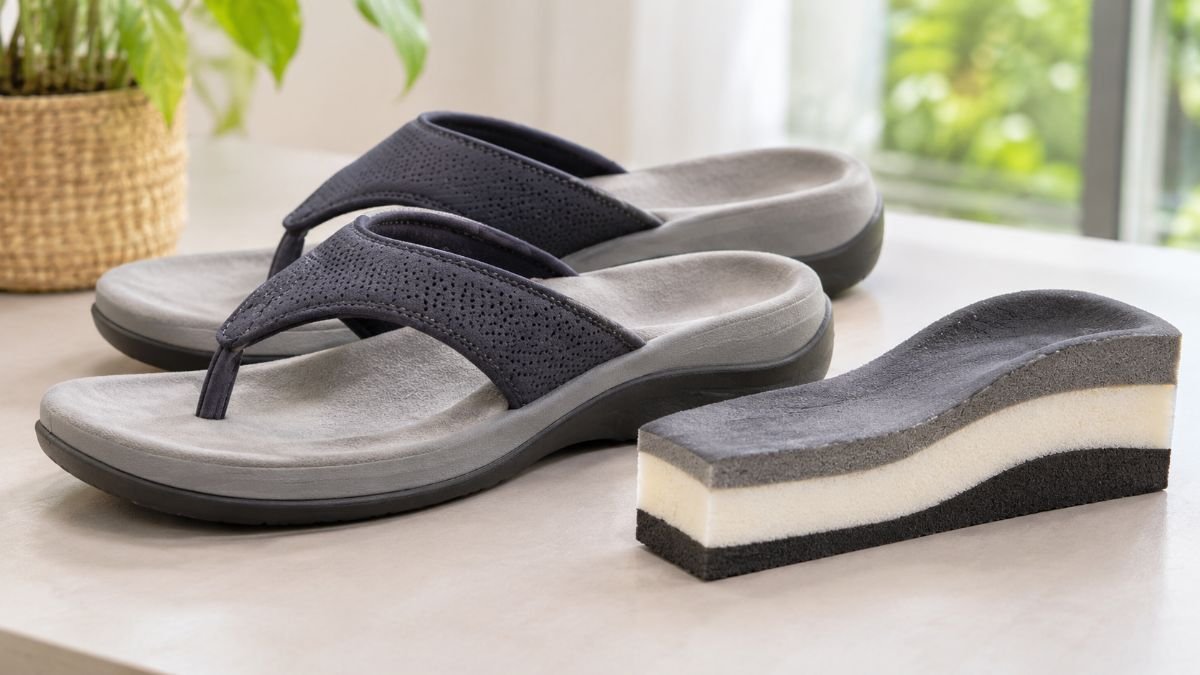
In medicine, orthopedics is the field that deals with bones, joints and muscles. On a slipper, “orthopedic” is a shop word that usually suggests extra cushioning, a contoured footbed or a softer feel. No law in India requires a slipper to meet a medical test before it carries the word, which is why our guide on footwear prescription terms separates shop labels from clinical terms such as orthosis, extra depth and rocker sole. A slipper sold as orthopedic may be comfortable, but it is not a prescribed device unless a doctor or podiatrist has prescribed and fitted it.
India has been developing a therapeutic footwear standard, IS 19956, which we describe in our BIS IS 19956 explainer. Until a certification is visible and verifiable on a pair, treat the label as a description.
Names You Will See
| Name | How the listing describes it | Example |
|---|---|---|
| Dr. Ortho | Acupressure-style orthopedic slippers | Flipkart listing for a men’s model |
| Doctor Extra Soft | Soft doctor slippers, diabetic orthopedic comfort | Flipkart listing for a men’s slide |
| Dr Plus | MCR/MCP diabetic-style women’s slippers | Flipkart listing |
| Ortho + Rest | Doctor soft MCR lightweight flip-flops for heel pain comfort | Flipkart listing |
| Other and unbranded | Many sellers use the same descriptive words | Search results on any marketplace |
Example listing pages: Dr. Ortho, Doctor Extra Soft, Dr Plus and a listing page that includes Ortho + Rest. We show them as examples of how products are described, not as recommendations.
Features That Actually Help Comfort
- Cushioned heel. A thick, springy heel helps with hard floors.
- Heel hold. A back strap or cup keeps the foot steady.
- Moderate arch shape. A mild contour helps some people, though a sharp arch bump can feel uncomfortable.
- Wide, soft straps. They reduce pressure on the top of the foot.
- Non-slip sole. A patterned tread lowers fall risk.
- Correct size. The foot should not overhang the footbed.
These are comfort features, not treatments. See our heel pain slippers guide for more on what published guidance says.
Orthopedic-Style Slippers Shoppers Compare
These are examples of slippers listed online. They are retail products and none is claimed to treat any condition. Check the live listing for prices.

Doctor Extra Soft Ultra Cushion Slippers for Men
Listed as lightweight men’s slippers for orthopedic and diabetic use.
View on Amazon.in
Doctor Extra Soft House Slipper for Women
The listing mentions MCR, orthopaedic, diabetic and acupressure features.
Check size and price
Ortho Joy Orthopedic Soft Slippers for Ladies
Listed as an MCR chappal for women for daily use.
See it on Amazon.in
MCR Healthcare Women's Orthopedic Soft Slippers
Listed as lightweight women’s chappals/sandals/slippers for orthopedic and diabetic use.
Compare on Amazon.in
YOHO ArchFlex Orthopedic Slippers for Men
Listed with arch support, anti-skid soles and light weight.
Compare on Amazon.in
Ortho + Rest Ortho Slippers for Women
A women’s daily-use orthopedic flip-flop, per the listing.
See it on Amazon.inTry them on in Chennai
If you are in Chennai, you can try MCR and MCP chappals in person at our Choolaimedu store (No. 223, Choolaimedu High Road, near Gangai Amman Kovil, Chennai 600094). We are a footwear shop, not a clinic. WhatsApp us to check what is in stock before you travel.
About Acupressure Nodules
Many orthopedic slippers have bumps or nodules on the footbed, sold as acupressure. Some people enjoy the massage feel, and others find the bumps uncomfortable or painful, particularly if their feet are sensitive. For anyone with diabetes, numbness or fragile skin, a bumpy footbed is a pressure risk, and you should ask your doctor before using one. Our acupressure slippers guide looks at the claims in detail.
Comparing Orthopedic Slipper Styles
| Style | Good for | Watch out for |
|---|---|---|
| Flat soft slide | Light indoor use | Little heel hold, can slip |
| Slide with heel strap | Walking around the house | Strap rubbing if narrow |
| Contoured footbed | People who like a shaped base | Arch bump can be uncomfortable |
| Acupressure nodules | Massage feel for some | Pressure risk for sensitive feet |
| Thick cushioned slipper | Standing on hard floors | Can feel unstable if very tall |
| Closed toe slipper | Protection from knocks | Heat and moisture |
Who Should Be Careful
- People with diabetes or numb feet, who should see a doctor or podiatrist first. See diabetic footwear.
- People with poor circulation or fragile skin.
- Those with bunions, hammer toes or other deformity, who may need extra depth or specially made footwear.
- Anyone with persistent heel, knee or back pain, since the cause needs checking.
- Older adults prone to falls, who need grip and a secure fit above softness.
Claims You Can Safely Ignore
- “Cures” heel pain, arthritis, sciatica or diabetes.
- “Recommended by doctors” without a named doctor.
- “Improves blood circulation” as a guaranteed result.
- “Clinically proven” without a study you can read.
- “Number 1 orthopedic slipper in India.”
If a seller makes a claim, ask for the evidence. Honest sellers will say what they know and what they do not.
Cushioning, Firmness and Foot Feel
Comfort is personal. Some people want a very soft slipper, while others find a soft slipper unstable and tiring because the foot sinks and the muscles work harder to keep balance. A medium-firm footbed with a cushioned heel suits many people, and a firmer base with a thin soft top layer can suit people who stand for long hours. Test the slipper both standing and walking. Stand on one foot for a few seconds and see whether the slipper tilts or the foot rolls over the edge. If it does, the sole is too soft or too narrow for you, whatever the label says.
Pay attention to how your feet feel at the end of the day, not only the first five minutes. A slipper that feels wonderful in the shop and leaves your arches aching by evening is not working for you. If you notice a new ache, red marks or numbness after wearing a pair, stop using it and see a doctor if the problem continues.
Choosing for Different Ages and Situations
| Person | Priorities | Avoid |
|---|---|---|
| Adult at a desk job | Light, supportive indoor pair | Very thick unstable soles |
| Person standing all day | Cushioned heel, grippy sole, secure strap | Paper-thin foam |
| Older parent | Easy fastening, non-slip sole, stable base | Loose slides that slip off |
| Person with swollen feet | Adjustable straps, wide fit | Tight closed fronts |
| Person recovering from foot problems | Doctor advice first | Self-selected bumpy footbeds |
| Pregnant women | Stable, supportive, adjustable | Slippery soles and high wedges |
| Child | Flexible, lightweight, correct size | Hand-me-down worn slippers |
These are general pointers. A doctor or podiatrist knows your situation better than any shop guide.
Getting the Fit Right
Fit is the most common reason an orthopedic slipper disappoints. Stand on the footbed with your heel at the back. Your heel should sit in the footbed without hanging over the rear edge, and your toes should not touch the front. Check that the strap sits over the widest part of your foot without cutting in. If you are between sizes, the better choice depends on the slipper. With an adjustable strap, the smaller size with room to adjust often holds better, while a fixed strap needs the larger size to avoid pressure. Measure both feet, since most people have one slightly larger foot. Our shoe size guide shows how to measure at home.
Slippers Around the House
Many falls and foot injuries happen at home, so the slipper you wear in the bathroom, kitchen and on stairs matters. Choose a closed or heel-held style with a patterned tread for wet floors, and avoid smooth, flat, loose-fitting slides on tile. Keep one pair at the door and one by the bed, so you are never tempted to walk barefoot at night. Our guide to slippers at home versus barefoot explains what research and public guidance say about home footwear.
Wet Weather and Humidity
In Chennai humidity, foam slippers can stay damp and smell. Rotate pairs, dry them in shade and wipe the footbed. For monsoon use, choose a grippy pair that dries quickly and keep the cushioned pair for indoor use. See monsoon footwear in Chennai.
What to Do If a Pair Does Not Work
- Stop wearing it if it causes pain, red marks or numbness.
- Check the size against your foot measurement.
- Ask the seller about an exchange, and keep the packaging.
- Try a different style: a heel strap, a flatter footbed or a different thickness.
- If discomfort continues with several pairs, see a doctor, since the cause may not be the slipper.
Questions to Ask Before You Pay
- What is the sole made of, and how thick is it at the heel?
- Is the footbed removable or fixed?
- Can I exchange for size?
- Is there a bump or contour in the footbed, and can I try it standing?
- Does the seller claim medical benefits, and on what evidence?
A One-Week Trial Routine
- Day 1: wear the pair for an hour or two indoors on a clean floor, then check your feet for red marks.
- Days 2 and 3: increase to half the time you normally spend in slippers, and notice any rubbing at the strap or heel.
- Days 4 and 5: wear them for a full day at home, and check how your feet, knees and back feel in the evening.
- Days 6 and 7: use them in the situations you bought them for, such as the kitchen or the bathroom, and check the grip.
If anything feels wrong at any point, stop and exchange the pair while it is still in good condition. A short trial is much cheaper than discovering a problem after weeks of use.
What to Spend
Most everyday orthopedic-style slippers sell for a few hundred rupees online. The price tells you little about whether a pair suits you. Spend where it counts: thickness at the heel, strap quality and grip. Skip extras you do not need, such as large acupressure bumps if your feet are sensitive. For price bands and how to read discounts, see our MCR slippers price guide.
How to Buy
- Decide the main use: indoors, work or outdoor.
- Measure your foot and check the seller’s size chart.
- Look at thickness, heel hold and strap.
- Press the footbed and check it springs back.
- Check the sole tread.
- Try the pair for a day indoors and check for red marks.
- Keep the packaging until you are sure.
See our shoe size guide and MCR slippers price guide.
Caring for Orthopedic Slippers
Wipe the footbed with a damp cloth, dry in shade and rotate two pairs. Replace when the cushioning flattens or the sole wears unevenly. See MCR slippers care.
In Chennai
At our Choolaimedu shop you can try several styles and compare thickness, heel hold and strap width by hand. We are a retail shop and do not diagnose or prescribe. If you have a medical foot condition, please see your doctor first.
Reading the Fine Print
Listings often include small facts that matter: weight, sole material, closure type and country of origin. A very low weight may mean thin foam. A closure type of “slip on” means no strap to adjust. Origin and manufacturer details are entered by the seller. Compare those details across listings instead of relying on the headline words, and look at the photos of the sole and strap join.
Common Mistakes
- Buying the thickest slipper because it looks protective, then finding it unstable.
- Choosing acupressure bumps for sensitive feet.
- Buying one size up to “give room”, which makes the foot slide.
- Wearing a new pair all day on the first day.
- Using worn out slippers because they feel soft.
- Expecting a slipper to treat pain.
Frequently Asked Questions
What does orthopedic mean on slippers?
It is a marketing word suggesting cushioning or a shaped footbed. It is not a medical certification.
Are Dr. Ortho slippers good?
They are widely sold acupressure-style slippers. Whether a pair suits you depends on fit and comfort, and the bumps may not suit sensitive feet.
Are orthopedic slippers good for diabetics?
Some people with diabetes use soft slippers, but fit and seams matter and a doctor assessment is advised, especially with numbness.
Can orthopedic slippers cure heel pain?
No. They may add cushioning and comfort. Persistent heel pain needs a proper assessment.
Do orthopedic slippers have a standard in India?
A therapeutic footwear standard, IS 19956, has been developed. Check any certification claim yourself.
Are acupressure slippers safe?
Many people use them, but the bumps can be painful and are a pressure risk for people with reduced feeling.
How often should I replace them?
When the cushioning flattens, the sole wears unevenly or the strap loosens, often within a year of regular use.
Can I try orthopedic slippers in Chennai?
Yes, you can try styles at our shop in Choolaimedu.
The Short Version
Orthopedic on a slipper is a shop label, not a medical certificate. Compare cushioning, heel hold, grip and fit, avoid bumpy footbeds if your feet are sensitive and see a doctor for persistent pain or diabetes.
Keep Reading
Chennai
Sources
- Flipkart: Doctor Extra Soft slide listing
- Flipkart: Dr Plus MCR/MCP slipper listing
- Flipkart: Dr. Ortho slipper listing
- Flipkart: men slippers listing page
- BIS: Draft Indian Standard, Therapeutic Footwear Specification (MHD 09), July 2025
- NHS: Heel pain
Some links on this page are affiliate links, so we may earn a small commission on qualifying purchases at no extra cost to you. See our affiliate disclosure. Foot-health content here is general information, not medical advice.


